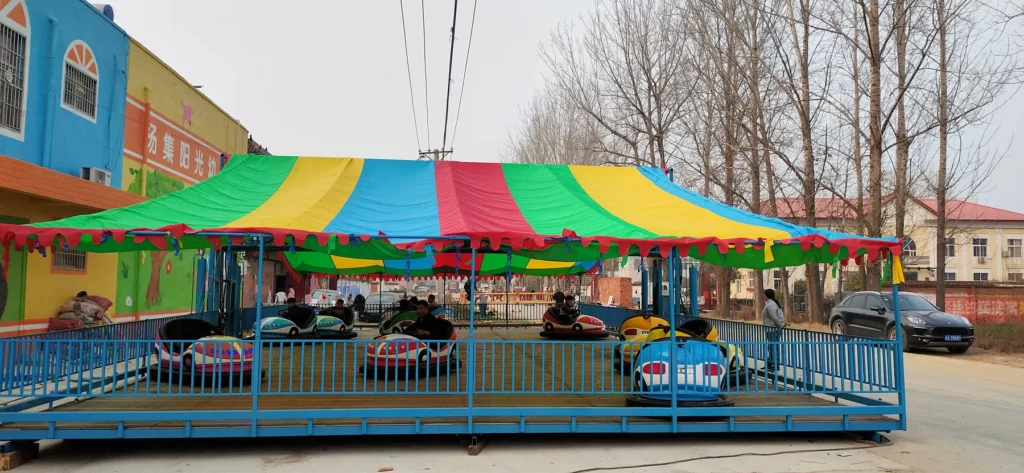
If you have been comparing mobile bumper cars for sale, the numbers that matter are these: a hydraulic folding arena costs about US$56,000–60,000 for the 9.6 m set (cars not included), carries 10–12 two-seater cars, and unfolds from a road-legal trailer to a full operating rink in around 3 hours. The 11 m floor-grid version and the 11.8 m ceiling-grid version scale up from there. This guide breaks down both versions with real factory specifications, so you can judge whether one fits your carnival route before you ask for a quote.
Most bumper car rinks you see in shopping malls or parks are built in place: steel plates welded down, cables buried, a control cabinet bolted to a wall. That rink stays there for its whole life. A mobile set inverts this — the floor, the fence, the power system and (on the ceiling-grid version) the overhead grid all fold onto a trailer. You tow it to the fairground, unfold it, and start selling tickets the same day.
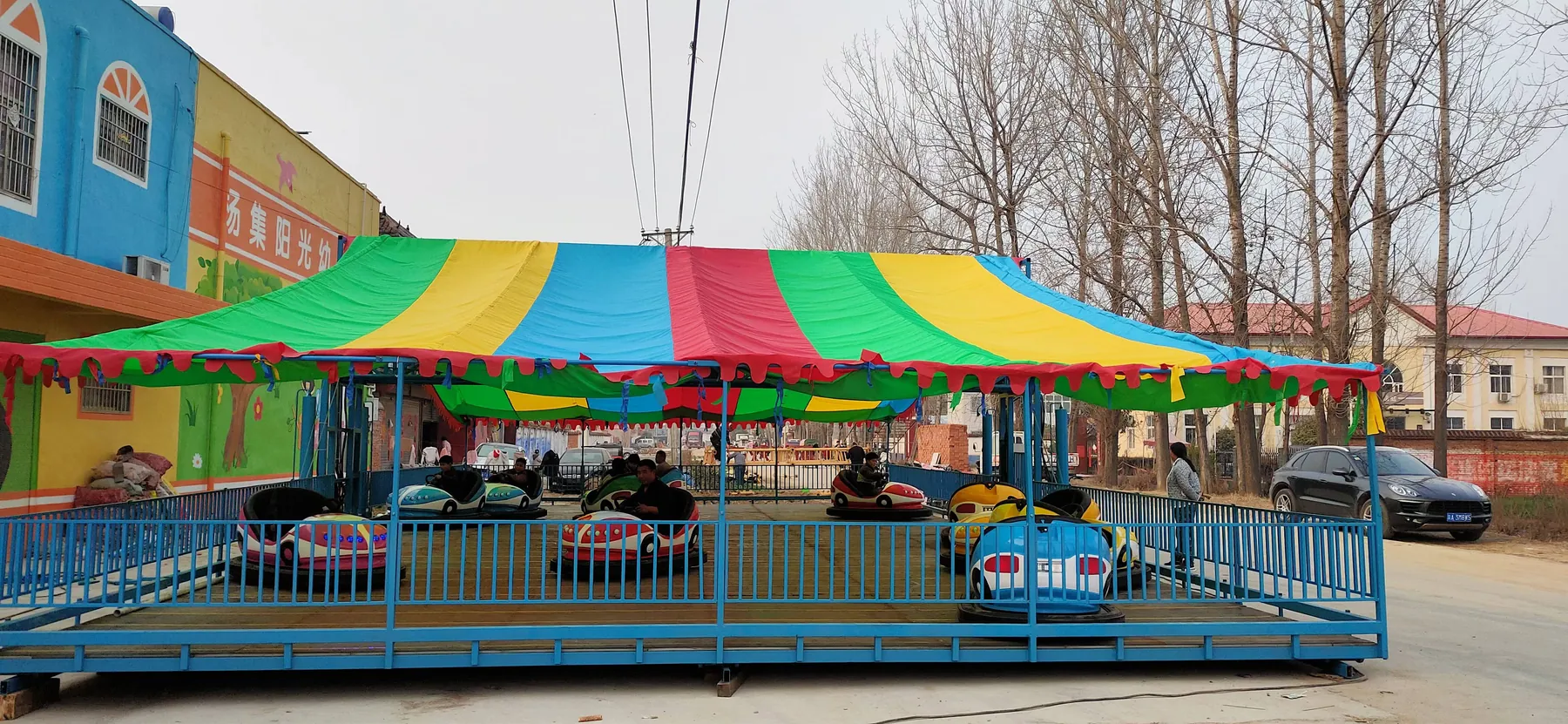
What Exactly Is a Hydraulic Folding Mobile Bumper Car Set?
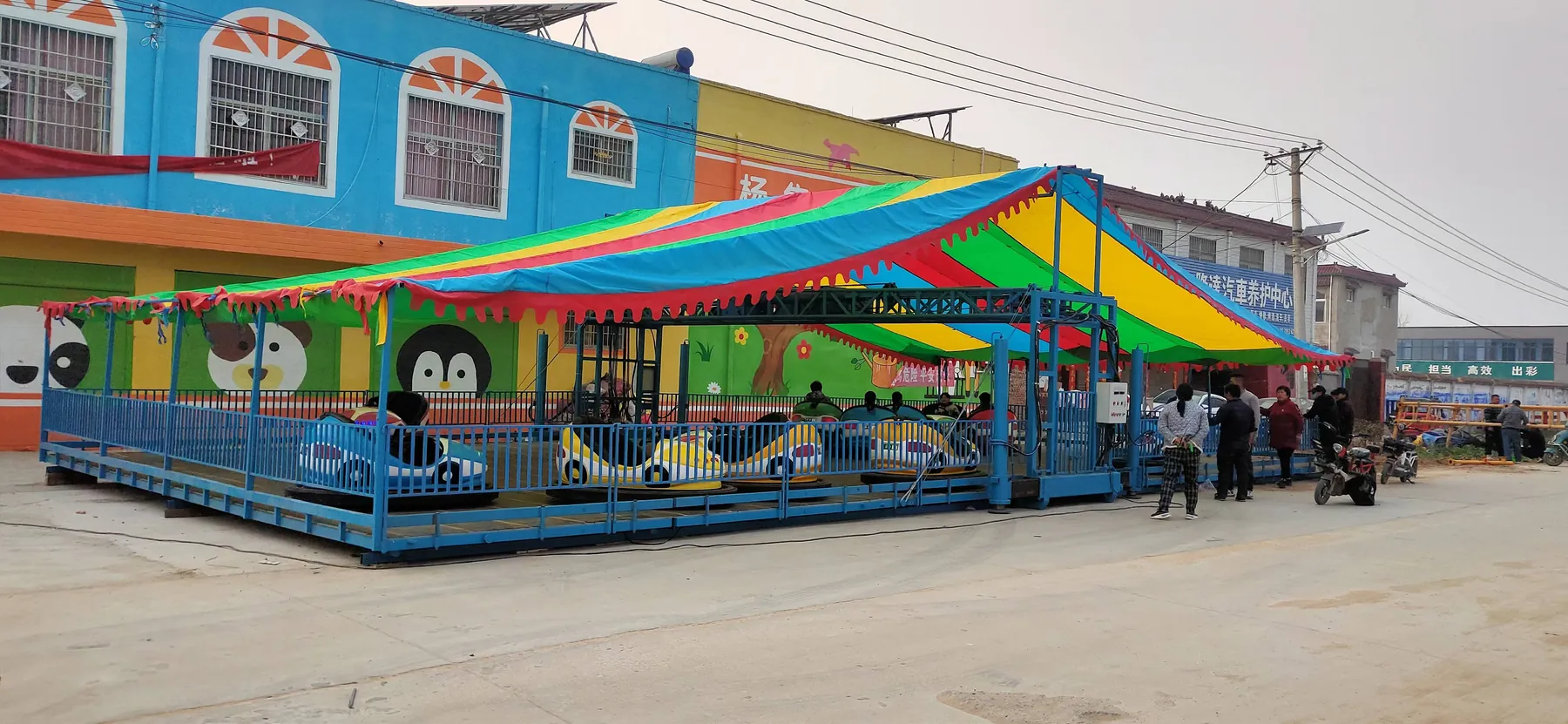
Think of it as a bumper car rink built on a trailer chassis. The platform is hinged in sections. A hydraulic pump station (5.5 kW) and a folding motor (2.2–3 kW depending on size) lift and unfold the whole structure — floor sections swing out, fence panels stand up, and on the ceiling-grid version the aluminum truss grid rises with two hydraulic cylinders. No crane, no welding crew. One operator with the control cabinet and a joystick handles the sequence.
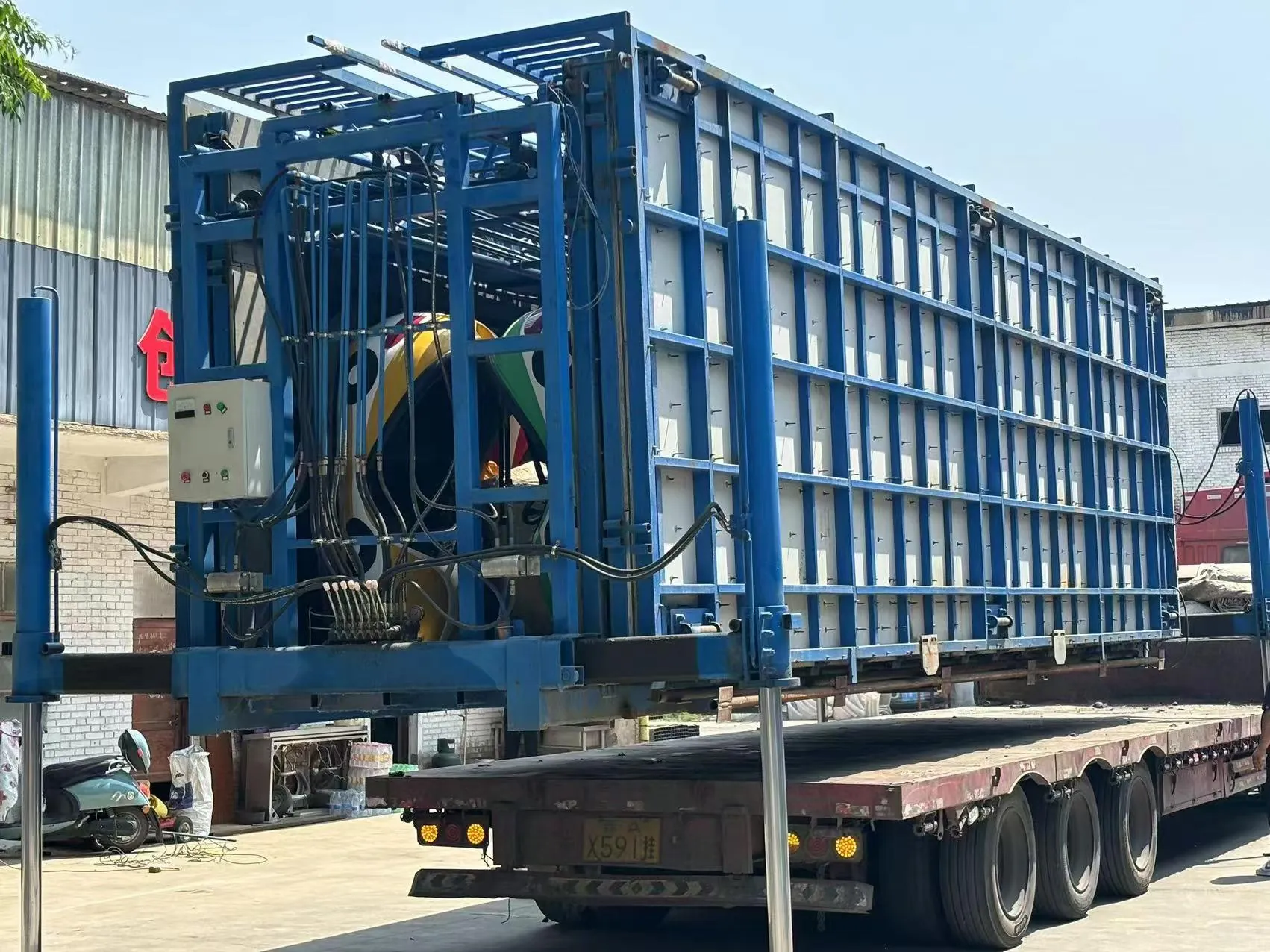
Folded, each size fits on a standard flatbed trailer:
- 9.6 m set: unfolds to 9.6 × 17.5 m, folds to 9.6 × 2.4 × 2.95 m
- 11 m set: unfolds to 11 × 16.2 m, folds to 11 × 2.17 × 2.78 m
- 11.8 m ceiling-grid set: unfolds to 11.8 × 25 m, folds to 11.8 × 2.2 × 2.55 m
The 9.6 m unit weighs about 17 tonnes empty, the 11 m about 19 t, and the 11.8 m ceiling-grid about 20 t — all before cars are loaded. A 13 m flatbed hauls any of them; the 11 m version also fits a shipping container, which matters if you plan to run it overseas.
Floor Grid or Ceiling Grid: Which Version Fits Your Route?
These are the two ways a grid-powered bumper car gets its electricity, and the mobile set comes in both. On a floor grid, conductive steel plates form the riding surface and the car picks up current through metal brushes underneath. On a ceiling grid, a pole on the car roof touches an overhead metal grid, so the floor stays a plain platform — but you need the truss structure above.
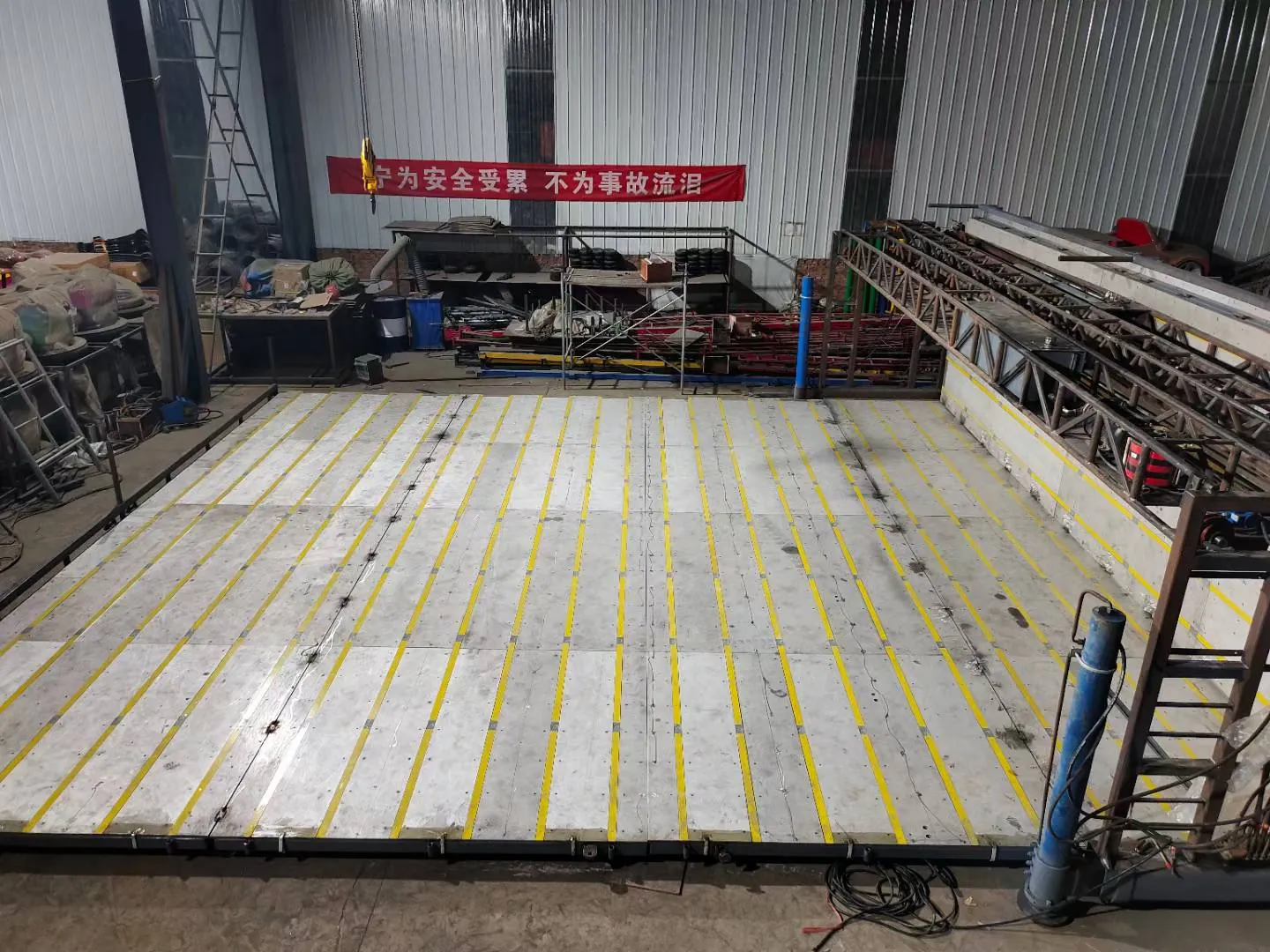
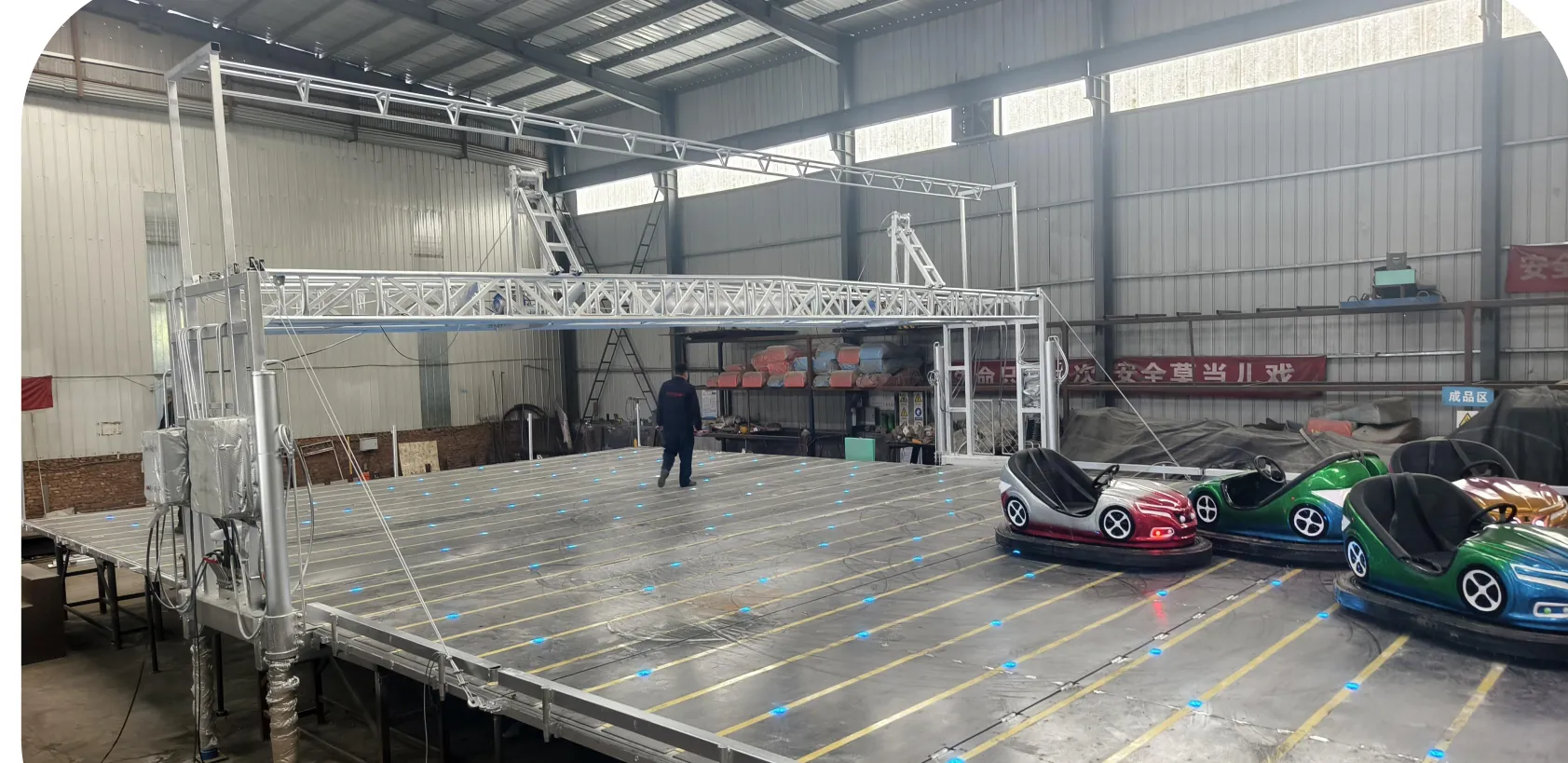
Here is how the three factory configurations compare:
| Item | 9.6 m floor grid | 11 m floor grid | 11.8 m ceiling grid |
|---|---|---|---|
| Unfolded size | 9.6 × 17.5 × 4 m | 11 × 16.2 × 4 m | 11.8 × 25 × 3.55 m |
| Folded size | 9.6 × 2.4 × 2.95 m | 11 × 2.17 × 2.78 m | 11.8 × 2.2 × 2.55 m |
| Bumper cars | 10–12 | 12 | per layout, quoted |
| Total weight | 17,000 kg | 19,000 kg | 20,000 kg |
| Pump station | 5.5 kW | 5.5 kW | 5.5 kW |
| Folding motor | 3 kW | 3 kW | 2.2 kW |
| Lighting | — | — | 3 kW |
| Input voltage | 380 V | 380 V | 220 V / 380 V |
| Transport | 9.6/13 m flatbed | 9.6/13 m flatbed, container | 13 m flatbed |
| Start-up | Control cabinet + joystick | ||
| Unfold & install | About 3 hours | ||
Setup: From Trailer to Tickets in About 3 Hours
A fixed rink is a construction project — ground works, steel, cabling, inspection. Measured against that, the mobile set’s whole pitch is time:
- Position the trailer on hard, level ground and stabilize it.
- Run the hydraulic sequence from the control cabinet — floor sections unfold, fence panels rise, and the ceiling grid (on that version) lifts into place with its hydraulic cylinders.
- Connect site power, roll the cars onto the platform, and test each one.
- Open for riders. Factory time for the full sequence: about 3 hours, and the same in reverse to move on.
Because the arena carries its own floor, you do not need a concrete slab, buried electrodes, or a building. A level grass edge at a fairground, a paved square, or a parking lot all work — the rink brings the surface with it.
Why Carnival Operators Choose This Over a Fixed Rink
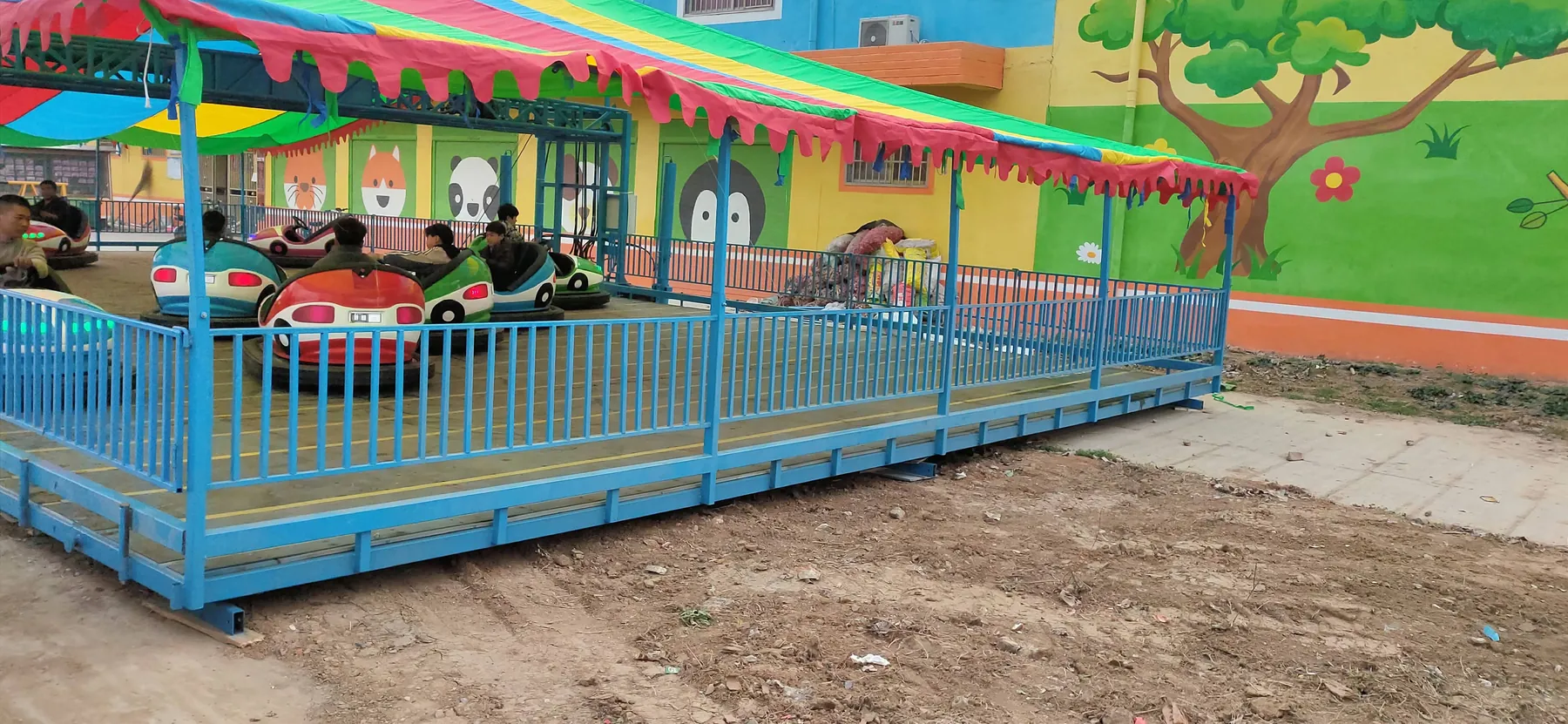
- Follow the money. A carnival route means different crowds every week. A fixed rink earns from one catchment; a mobile set earns from all of them.
- No construction, no landlord. There is no building work to permit and nothing permanent left on the host site — which keeps site agreements simple.
- Faster payback logic. You are buying one arena that works 52 weekends in different locations, instead of one location hoping for traffic.
- Storage is trivial. Folded, it parks like a trailer. No warehouse rink-sized hall needed in the off-season.
The Cars That Ride On It
The grid-powered cars themselves follow the factory’s standard platform:
- Body: 1950 × 1150 mm, roughly 0.85–0.97 m tall, 2 seats per car
- Shell: FRP (fiberglass), 30+ shell styles, colors customizable — race, retro, animal and cartoon themes among them
- Drive: floor-grid cars run a 48 V / 230 W front motor; ceiling-grid cars a 90 V / 260 W motor — mains-fed, so cars run all day with no charging breaks
- Ride control: LED lighting, timer panel adjustable 0–60 minutes, remote start; coin or QR-code start available on request
- Safety: 3-point seat belts, inflatable-style rubber bumpers, soft leather seats
Continuous operation is the real advantage over battery bumper cars here. Battery models need charging cycles and spares in rotation; a grid-fed car just keeps driving as long as the arena is powered — exactly what a carnival queue expects.
How Much Does a Mobile Bumper Car Set Cost?
Most listings for mobile bumper cars for sale end at the price tag and skip the real question: what does a full operating set cost, and what changes that number? Prices are quoted EXW from the factory and move with size, car count and options. As orientation ranges from current factory quotes:
The 11 m and 11.8 m sets cost more and are quoted per configuration — the ceiling-grid version adds the aluminum truss structure and a 3 kW lighting package. For comparison, a fixed indoor floor-grid rink starts lower on paper but adds steel-floor construction, and it cannot move. Final pricing always depends on your destination port, car quantity and customization, so treat these ranges as planning figures, not quotes.
Standard trade terms: 30% T/T deposit, balance before shipment; production about 20 days plus roughly 3 days of on-site setup support; CE certification; 1-year warranty on the complete set and 3 years on the motors.
5 Things to Confirm Before You Pay a Deposit
- Ground and access. You need hard, level ground at least the unfolded footprint (up to 11.8 × 25 m) plus truck access and a queue area.
- Site power. 380 V three-phase is standard; the 11.8 m ceiling-grid accepts 220 V or 380 V. Confirm what your generator or supply actually delivers.
- Transport plan. 17–20 t folded — a 13 m flatbed locally, and the 11 m version fits a container if you are importing.
- Car count and shells. 10–12 cars is the standard load-out; pick shell styles early because colors and themes are built to order.
- Written terms. EXW or CIF, the 30% deposit schedule, and the warranty terms in the contract — not in a chat message.
FAQ
How long does it really take to set up?
About 3 hours from folded trailer to operating rink, driven by the hydraulic system from the control cabinet. The reverse takes about the same when the fair moves on.
Do the bumper cars need charging?
No. Floor-grid cars pick up current from the conductive steel floor; ceiling-grid cars from the overhead grid. They run continuously while the arena is powered — no battery swaps mid-session.
What power supply does the site need?
380 V input for the 9.6 m and 11 m sets. The 11.8 m ceiling-grid set accepts 220 V or 380 V, which helps at venues without three-phase supply.
Can it be shipped overseas?
Yes. The 11 m floor-grid set folds to fit a shipping container; the 9.6 m and 11.8 m sets ship on flatbeds and are crated for sea freight. Tell us your destination port and we quote accordingly.
Indoor or outdoor?
Both. The canopy keeps rain and sun off the ride; the platform carries its own floor, so the ground underneath only needs to be level and firm.
What about spare parts and after-sales?
Motors carry a 3-year warranty, the complete set 1 year, with lifetime paid service after that. Wear parts — tires, brushes, steering wheels — ship with the set and are standard sizes.
Ready to Price Your Route?
If you are weighing mobile bumper cars for sale against building a fixed rink, send us three things: your route (cities or fairs), your site size, and your destination port. We will reply with the right version — floor grid or ceiling grid — a car count that fits, and an EXW quote valid for your planning. You can also browse the full amusement rides catalog or read how grid systems work in Bumper Cars 101: battery vs floor grid vs ceiling grid.