Buyer’s Guide · Updated September 2026
Sightseeing Train for Sale: Which Model Actually Fits Your Site?
Real specs, real price ranges and real delivery times from our own production floor in Kaifeng — including a 27-seat lithium train shipped to South America and a 70-seat custom diesel built for a US hotel in 20 days.
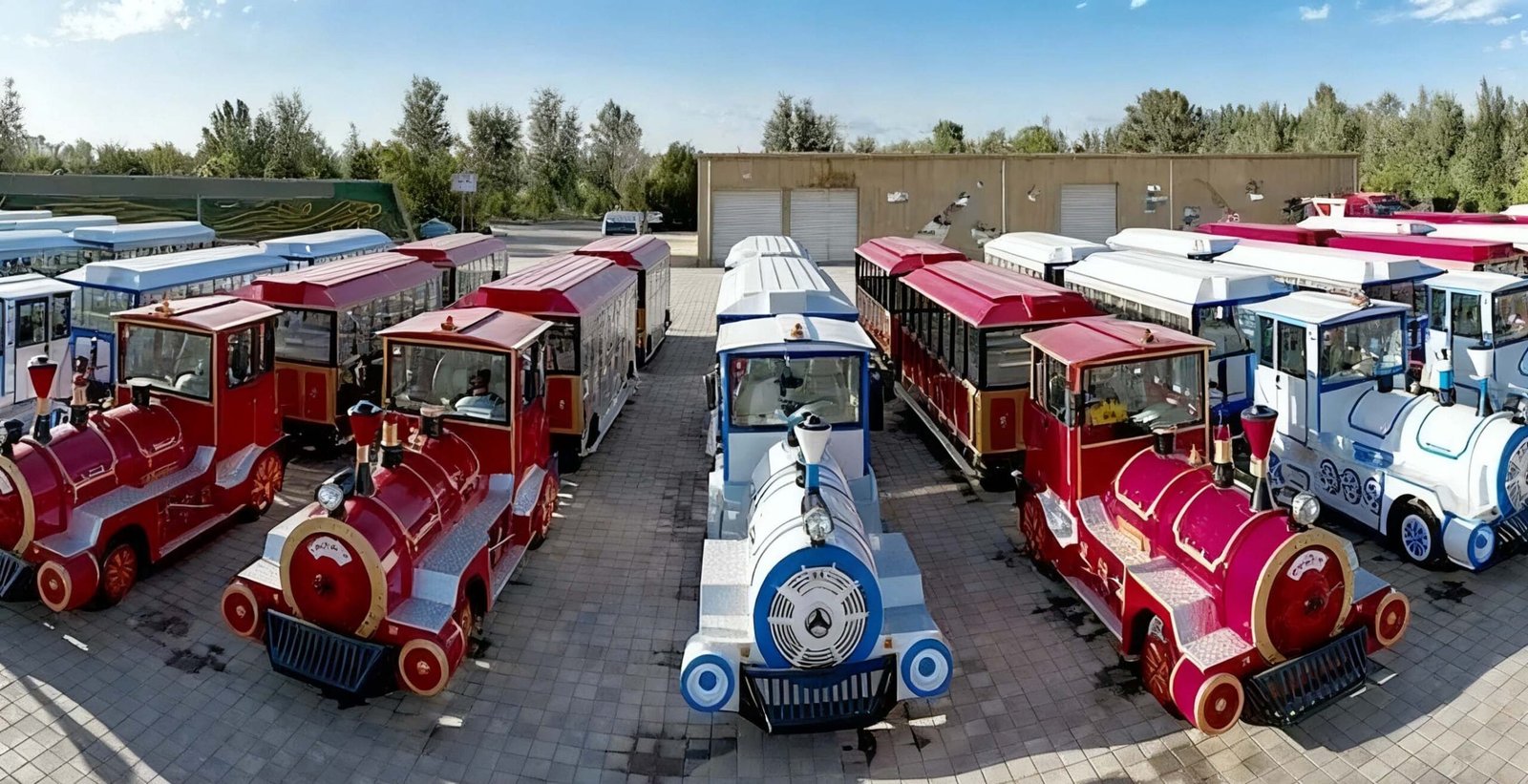
Most people shopping for a sightseeing train for sale arrive with the same three questions. How many people can it carry, what does it cost, and how long until it is running on my site. All fair. So instead of another page of happy adjectives, this is the guide we wish every first-time buyer would read before comparing quotes: the numbers we actually build against, and the decisions that move them.
01Start with one decision: rails or no rails
Everything else follows from this.
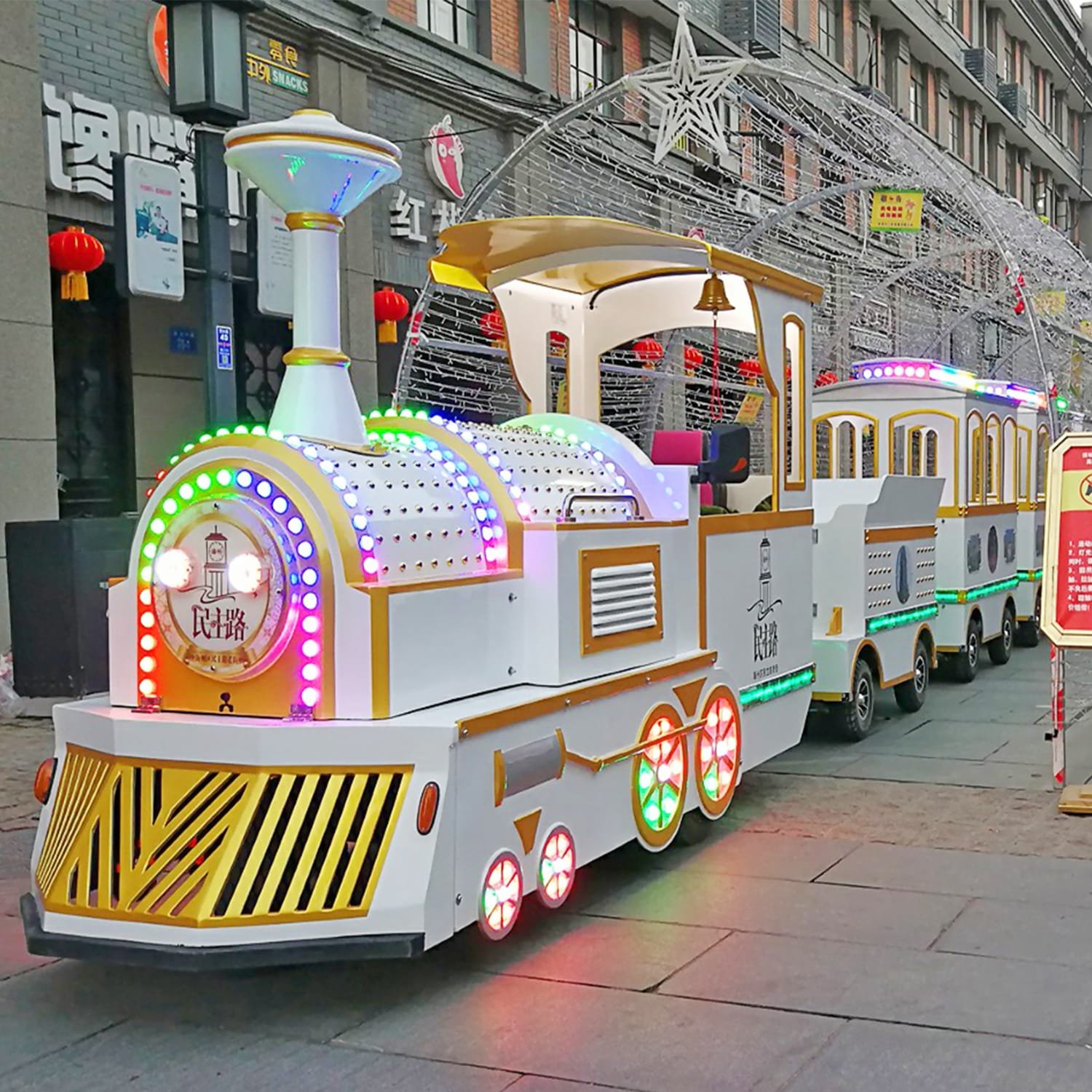
A trackless train — also sold as a road train or tourist train — runs on ordinary paved ground. No construction, no track permits, and you can change the route whenever your site layout changes. Our carriages follow the locomotive’s own path, so a 27-seat train needs about 6.6 m of turning radius and nothing more.
A track train needs rails first: typically 300 mm gauge on 8 kg steel rail over wooden sleepers. In exchange you get something a road train cannot offer — a fixed, themed route that feels like a proper little railway, with speeds held at about 7 km/h and an emergency stop under six metres. For zoos and botanical gardens where the route itself is the attraction, that is usually the right trade.
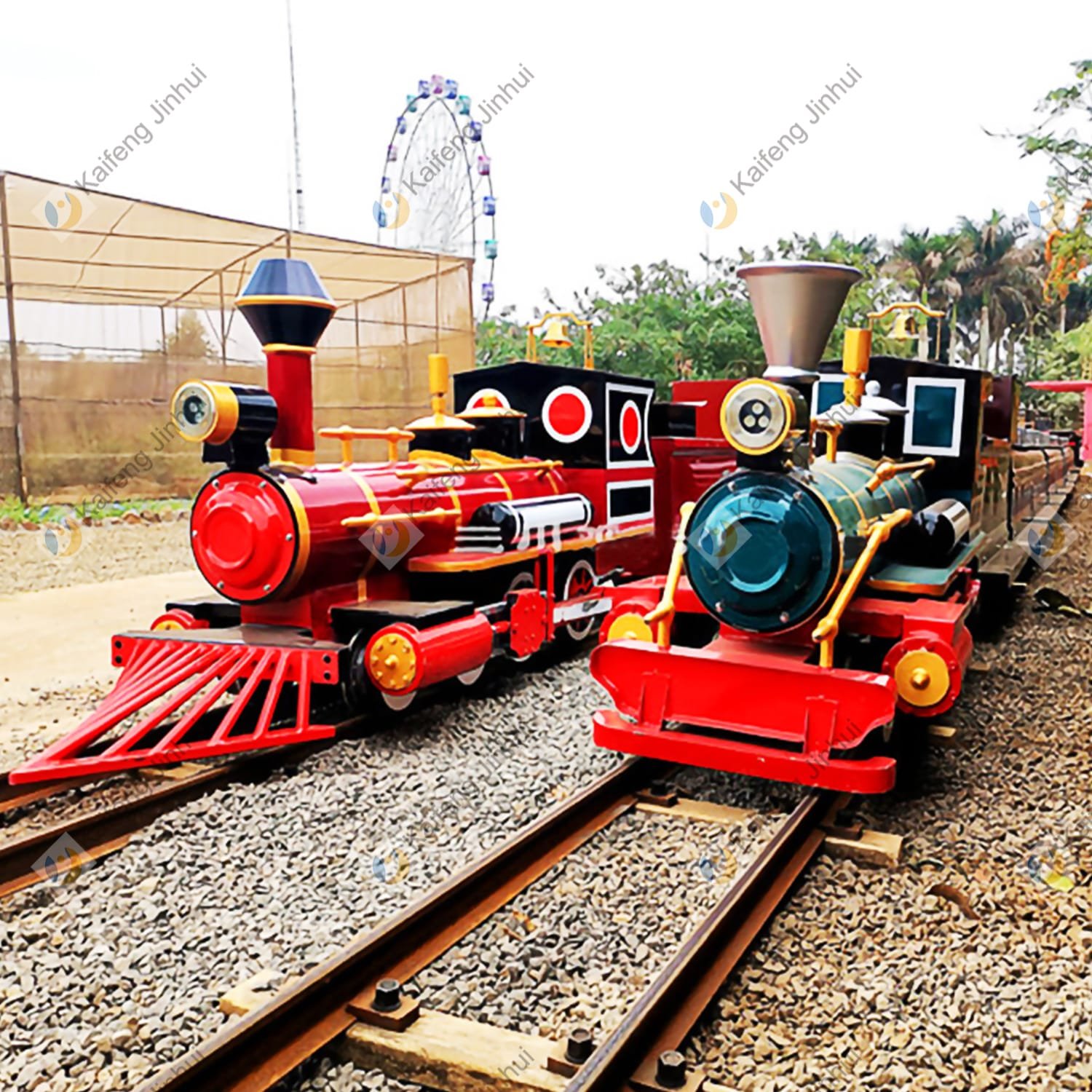
| Trackless train | Track train | |
|---|---|---|
| Ground work | None. Runs on asphalt, concrete or compacted gravel | Rails and sleepers to lay, level and maintain |
| Speed, loaded | 19–25 km/h | ≤ 7 km/h |
| Turning | 6.6–8 m outer radius | Fixed by track curve (≥ 6 m) |
| Route changes | Anytime, no cost | Means re-laying track |
| Best for | Parks, scenic areas, malls, hotels, city streets | Zoos, gardens, themed railway routes |
02Second decision: what powers it
Three options. The right one depends on your route length, your gradient, and whether you have anywhere to charge.
Lithium (LiFePO4) — the default for serious routes
Our 27-seat train runs a 72 V 800 Ah pack: six to eight hours of continuous running, roughly 80 km. Cells ship with UN38.3 test reports and MSDS, so sea freight is routine paperwork rather than a problem. On the 42-seat model the lithium pack carries a 5-year or 200,000 km warranty.
Lead-acid — still sensible for small loops
For the smaller mall and park trains, five 12 V 150 Ah batteries giving 7–9 hours cost less upfront. The trade-off is weight and maintenance: the packs need a monthly electrolyte check and they will be replaced sooner than lithium.
Diesel — when the route is long or hilly
Our 42-seat diesel uses a Cummins ISF 2.8-litre engine, 96 kW (130 hp), with EGR and DOC after-treatment to meet Euro IV. It holds 25 km/h fully loaded and keeps climbing on the gradients that hollow out an electric train’s runtime. It is also the platform that takes full air conditioning without sacrificing the day’s schedule.
03What each size is actually for
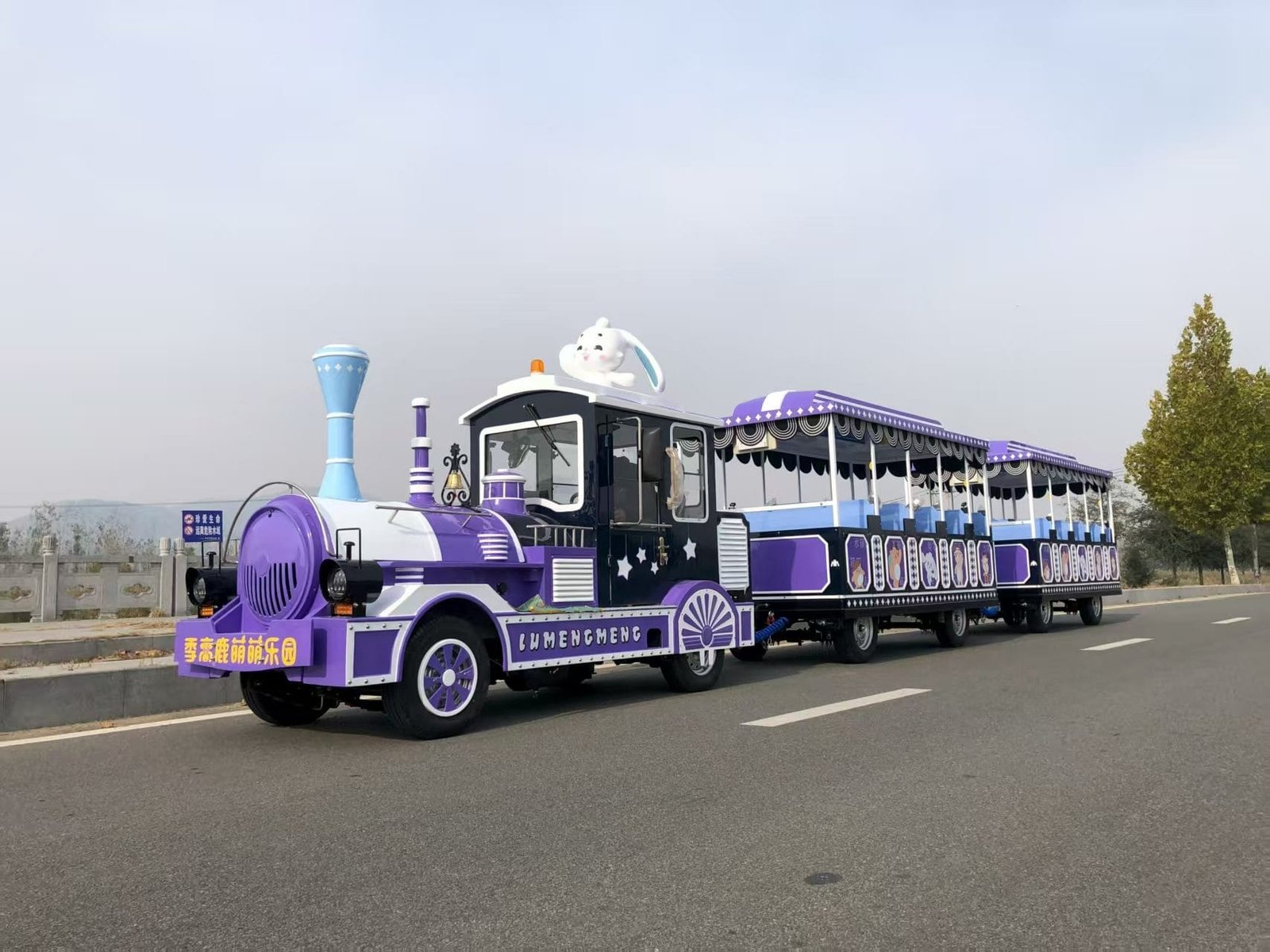
Almost every sightseeing train for sale falls into one of four sizes. Matching the size to the site is the biggest decision left after rails and power: too small and you cannot clear the queue, too large and you run half-empty.
- 1 locomotive + 2–3 carriages
- ~3 kW motor, 72 V / 60 V
- Turning radius from 3 m
- 7–9 h running time
Short loops with a constant queue: shopping centres, plazas, indoor family parks.
- 1 + 3 carriages (9 + 9 + 9 + driver)
- 20 kW motor, 72 V 800 Ah lithium
- 19–20 km/h loaded, 7% grade
- 15.1 m long, 6.6 m turning radius
Park and scenic-area loops over roughly 2 km, where all-day runtime matters.
- 2-seat locomotive + 2 × 20-seat carriages
- Lithium, or Cummins 2.8 L diesel
- Up to 25 km/h loaded (diesel)
- Takes full air conditioning
Long or hot routes — the configuration most US and Middle East buyers choose.
- 2-seat locomotive + 2 × 35-seat carriages
- 17.1 m long, 5.5 t, 72 V lithium
- ≤ 19 km/h, 8 m turning radius
- Needs a wide, well-paved route
High-traffic scenic railways. Nothing moves more people per departure.
04What actually moves the price
Five factors, in order of impact:
1. Carriage count. Every extra carriage adds its own unit price plus the motor and battery capacity needed to pull it. A 1+3 is not a 1+2 plus one carriage; the whole drivetrain is specified differently.
2. Battery capacity. The same 27-seat body ships in a lighter 72 V 230 Ah build or an all-day 72 V 800 Ah build. That single choice can be the difference between a $28,000 and a $48,000 quote.
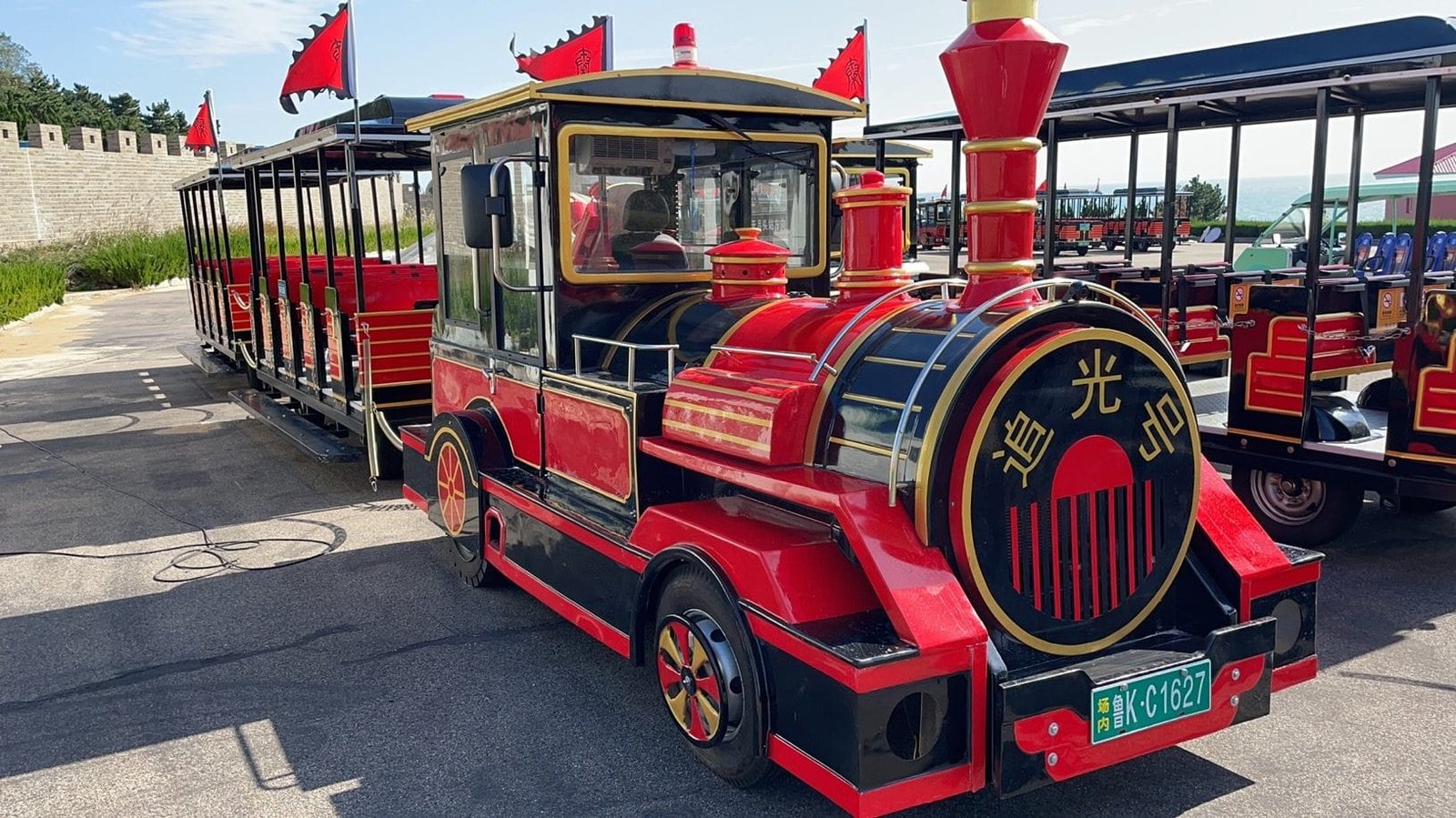
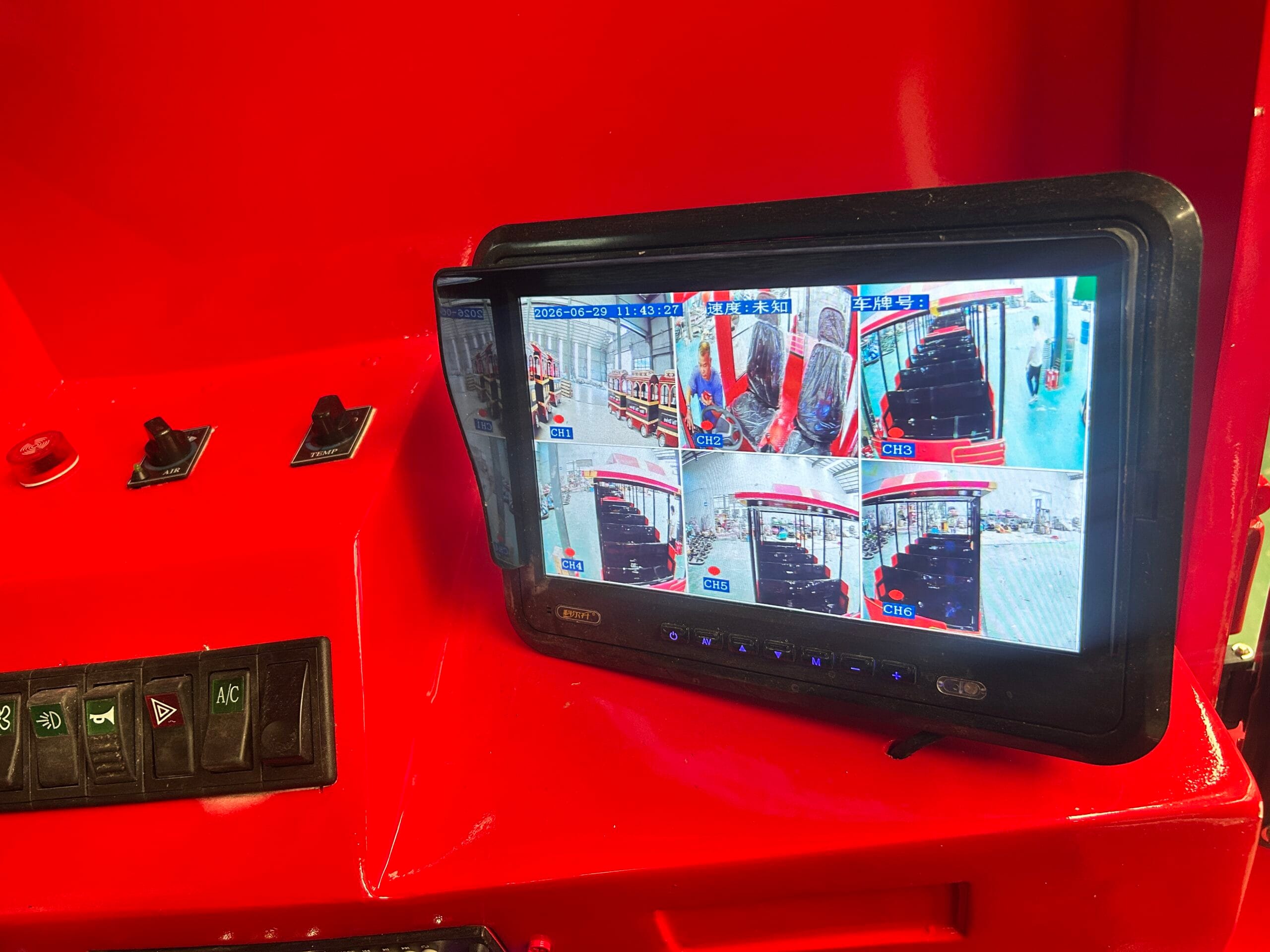
3. Enclosure. Open carriages with a canopy are standard. Semi-enclosed with doors, or fully enclosed with air conditioning, adds real engineering — the AC system on the US hotel build was designed into the roof structure, not bolted on afterwards.
4. Theme and branding. Custom computer-matched paint, your logo on the carriages, themed sculpting for animal trains and vintage locomotives. Priced per project and often absorbed into larger orders.
5. Power type. Lithium over lead-acid; diesel over both when the terrain demands it.
| Configuration | Indicative FOB range (USD) |
|---|---|
| 13–24 seats, lead-acid, 1+2 or 1+3 | $9,000 – $18,000 |
| 27 seats, lithium, 1+3 | $28,000 – $48,000 |
| 42 seats, lithium or diesel | $40,000 – $55,000 |
| 72 seats, custom build | $60,000 – $90,000+ |
05Lead time, shipping and what’s in the crate
Standard models leave the workshop in 15–30 working days. The 70-seat custom diesel for the US hotel — new AC integration, full LED package, customer branding — went from confirmed drawings to a loaded container in 20 days.
A 27-seat 1+3 train ships in a single 40 ft container, each unit chocked on wooden blocks and lashed with steel straps; smaller trains fit a 20 ft. Everything is wrapped in foam and black cotton felt for the sea leg. You receive the packing list, commercial invoice, and the battery’s UN38.3 report and MSDS for customs. Warranty is one year on the main mechanical parts, and up to five years on the lithium packs.
06Before you wire a deposit
We would ask any supplier these five questions — including our competitors. The answers take ten minutes to request and save months of regret.
- The full-load climb video. Not a render, not an empty-vehicle clip. Ask for the loaded grade test on a real slope.
- Battery paperwork. UN38.3 test summary and MSDS. No paperwork means no smooth customs clearance.
- The production licence. Non-road tourist trains fall under China’s special-equipment rules and GB/T 38433-2019. Ask for the licence number and verify it.
- The loading plan. How do four units actually fit and strap into one container? Photos from a previous shipment settle it instantly.
- Who answers the phone in month six? A named contact, a spare-parts list, and remote video support should come with the machine, not as an upsell.
07Two recent shipments
United States · Hotel transport
70-seat custom diesel, delivered in 20 days
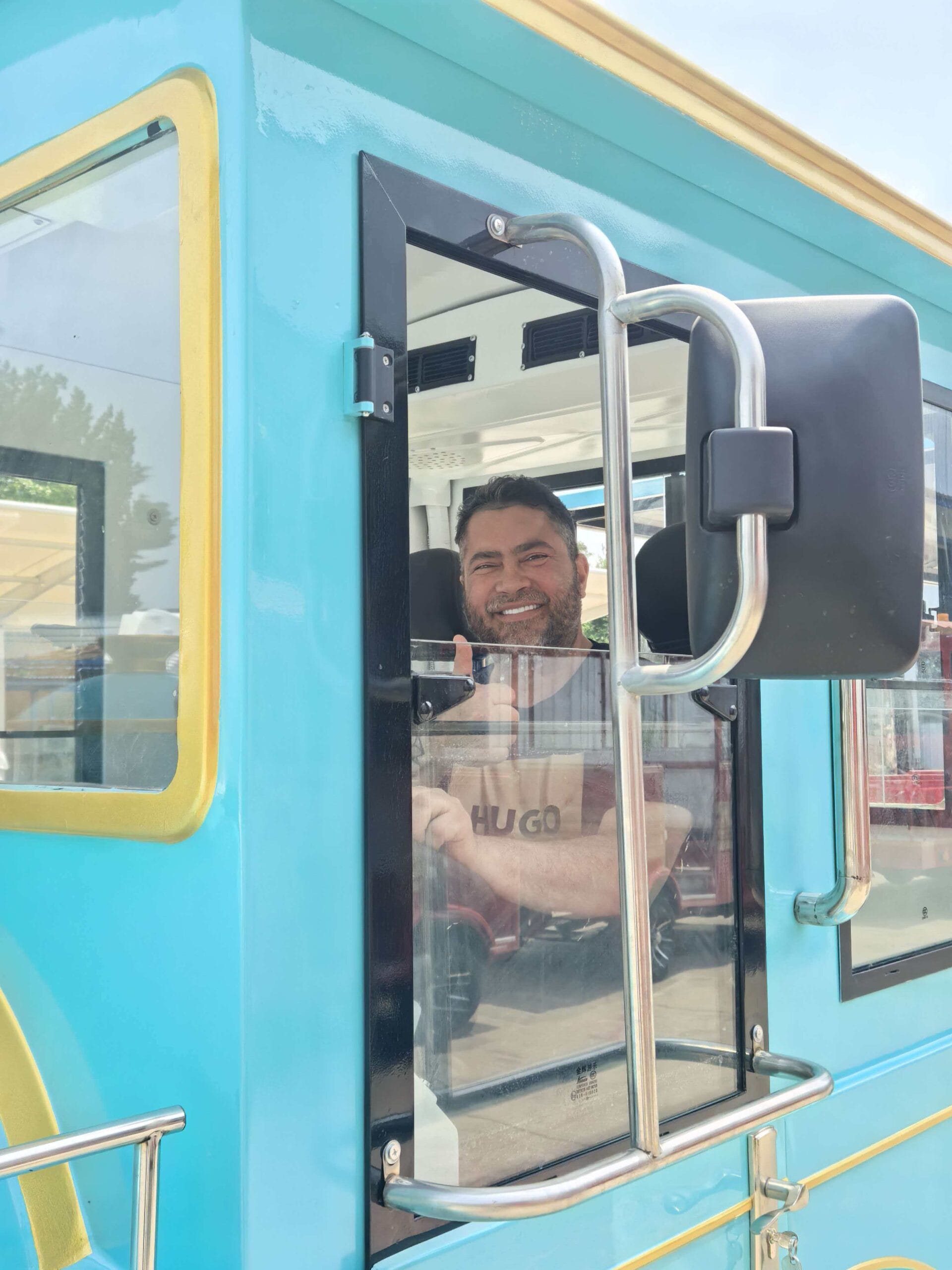
A hotel operator toured our Kaifeng workshop after the June 2026 Canton Fair, confirmed the spec on site — diesel for long runtime, full air conditioning, LED lighting throughout, their own branding — paid the deposit, and the train was loaded into a container three weeks later.
Bolivia · Resort shuttle
27-seat lithium, shipped CIF to Arica
One locomotive plus three 9-seat carriages, 20 kW drive and a 72 V 800 Ah lithium pack, shipped CIF with marine insurance included. The full-load grade test and battery UN38.3 file went to the buyer before the deposit was paid.
08Questions we get every week
How long does one charge last?
Six to eight hours of continuous running on the 27-seat lithium build, and seven to nine hours on the smaller lead-acid trains. A smart charger refills the lithium pack in four to six hours, and cuts itself off when full.
What gradient can it climb?
7% at full load on the 800 Ah 27-seat build; the lighter 24-seat configuration reaches about 20%. If your site has sustained hills, tell us the gradient when you ask for a quote — it changes which power system we recommend.
Do I need a licence to operate it?
Rules differ by country. In China these are classed as non-road tourist vehicles and operators complete site-level training. We supply the operations manual and remote operator training with every order, and most of our buyers run them on private park or resort roads.
Can you build it in my theme and colours?
Yes. Paint is computer-matched to any reference, and carriages, seating layout, doors, glazing, air conditioning, lighting and branding are all configurable. Animal, vintage and themed locomotive bodies are built in-house.
How is it shipped and what documents come with it?
Sea freight on FOB Qingdao or CIF to your port. A 1+3 train goes in one 40 ft container; smaller trains in a 20 ft. You get the commercial invoice, packing list, and the battery UN38.3 report and MSDS for customs.
Get a quote against your actual route
Send us four things: route length, surface type, steepest gradient, and expected daily ridership. We will come back with a recommended sightseeing train build and an FOB or CIF price — not a brochure.
Request a QuoteOr browse the range first: trackless trains · track trains · electric trains
JHRides (Kaifeng Jinhui Amusement Equipment Co., Ltd.) · Kaifeng, Henan, China · CE certified, exporting to 80+ countries since 2008.

Pingback: Sightseeing Train from China: The Documents You Need