Buying Guides · Shipping & Compliance
What Documents Do You Need to Buy a Sightseeing Train — and Actually Run It?
A checklist taken from a real shipment, not a template: the battery reports, the emission certificate, the dangerous-goods booking papers and the checks we run when the container opens.
Three recent enquiries ended the same way. The buyer had picked a model, agreed a price, then the freight forwarder stepped in and asked for an engine emission certificate, the battery MSDS and a dangerous goods report for sea freight. Two of the three buyers had never heard of these documents. Neither had, frankly, most first-time importers.
So here is the full list, in the order you will meet them, from choosing a factory to the first paying passenger. Everything below comes from our own 2026 shipments — including a 27-seat electric train we shipped from Qingdao to Arica for a Bolivian operator, whose paperwork we use as the worked example.
Which documents you need is decided by three things only:
1. What powers the train. A lithium-battery train ships as Class 9 dangerous goods, UN 3556. A lead-acid train has its own (lighter) paperwork. A diesel train needs emission documents instead.
2. Where it is going. The United States cares about EPA engine certification. Other markets have their own rules for non-road vehicles.
3. Who clears customs. If you buy FOB, you handle destination clearance and need the commercial set (invoice, packing list, B/L). If you buy CIF like our Bolivia client, the factory's forwarder carries the export side and you prepare to receive.
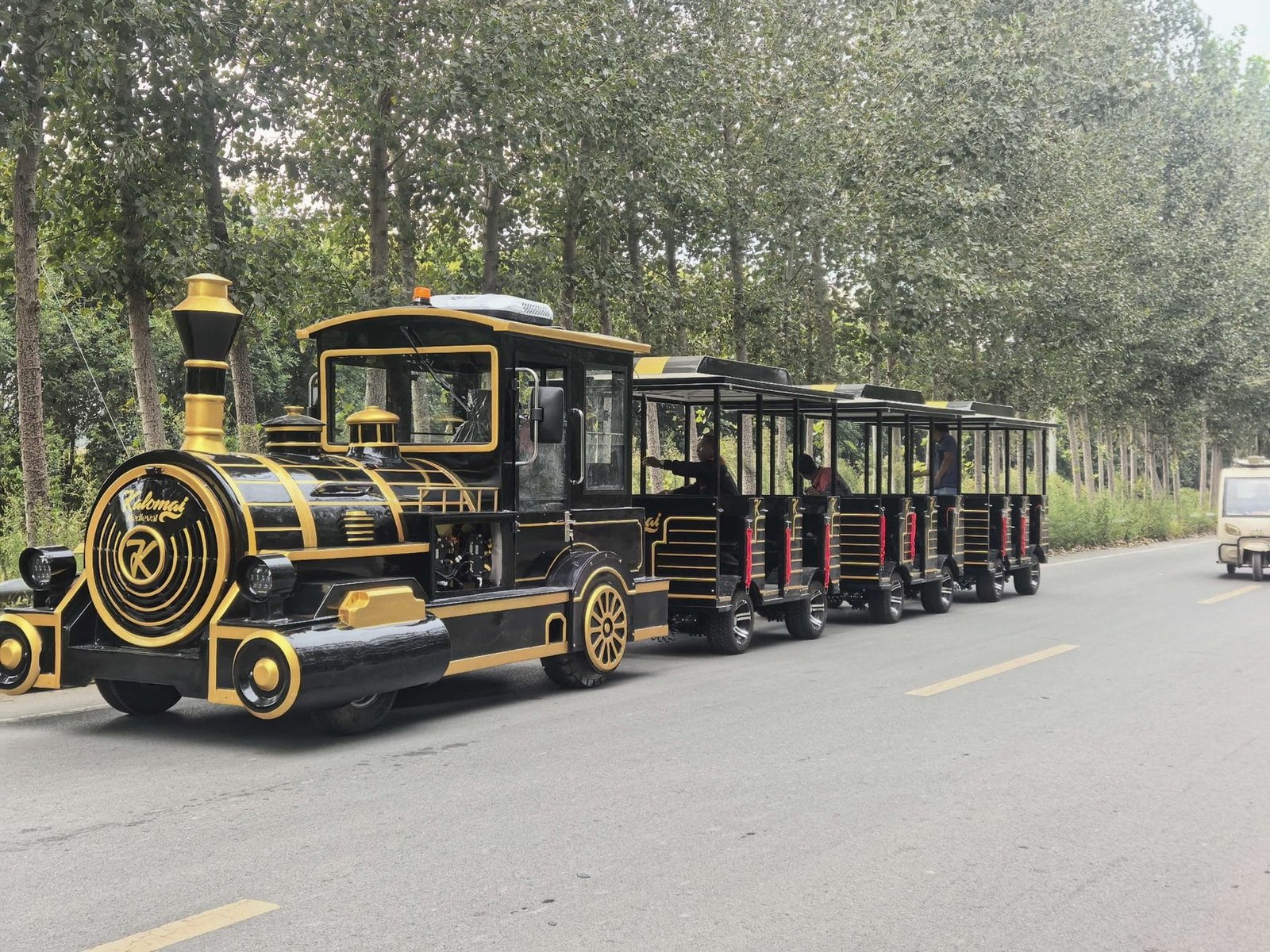
01Before you pay the deposit: documents that prove the factory
Paperwork starts before any certificate. A sightseeing train from China is a machine worth tens of thousands of dollars, ordered from someone you may never have met. Ask for these five things, and read them:
- Business licence with export record. Confirms the company exists and ships directly, not through a trading office that disappears after the deposit.
- Proforma invoice (PI). Model, seats, battery or engine specification, price, Incoterm, lead time, payment terms. Every later document — contract, inspection report, booking — must match this PI.
- Sales contract with a technical annex. The annex matters more than the price page: dimensions, motor power, battery capacity, braking type, standard GB/T 38433-2019 (the Chinese standard for trackless sightseeing trains) written in black and white.
- Factory proof. A live video walk-through or a visit. Photos of the welding shop, the paint shop, finished trains in the yard.
- Factory inspection report before shipment. A dated report with photos: function test, brake test, lights, seat condition. Ours are numbered per order (for example PI-202608-01) so they trace back to the contract.
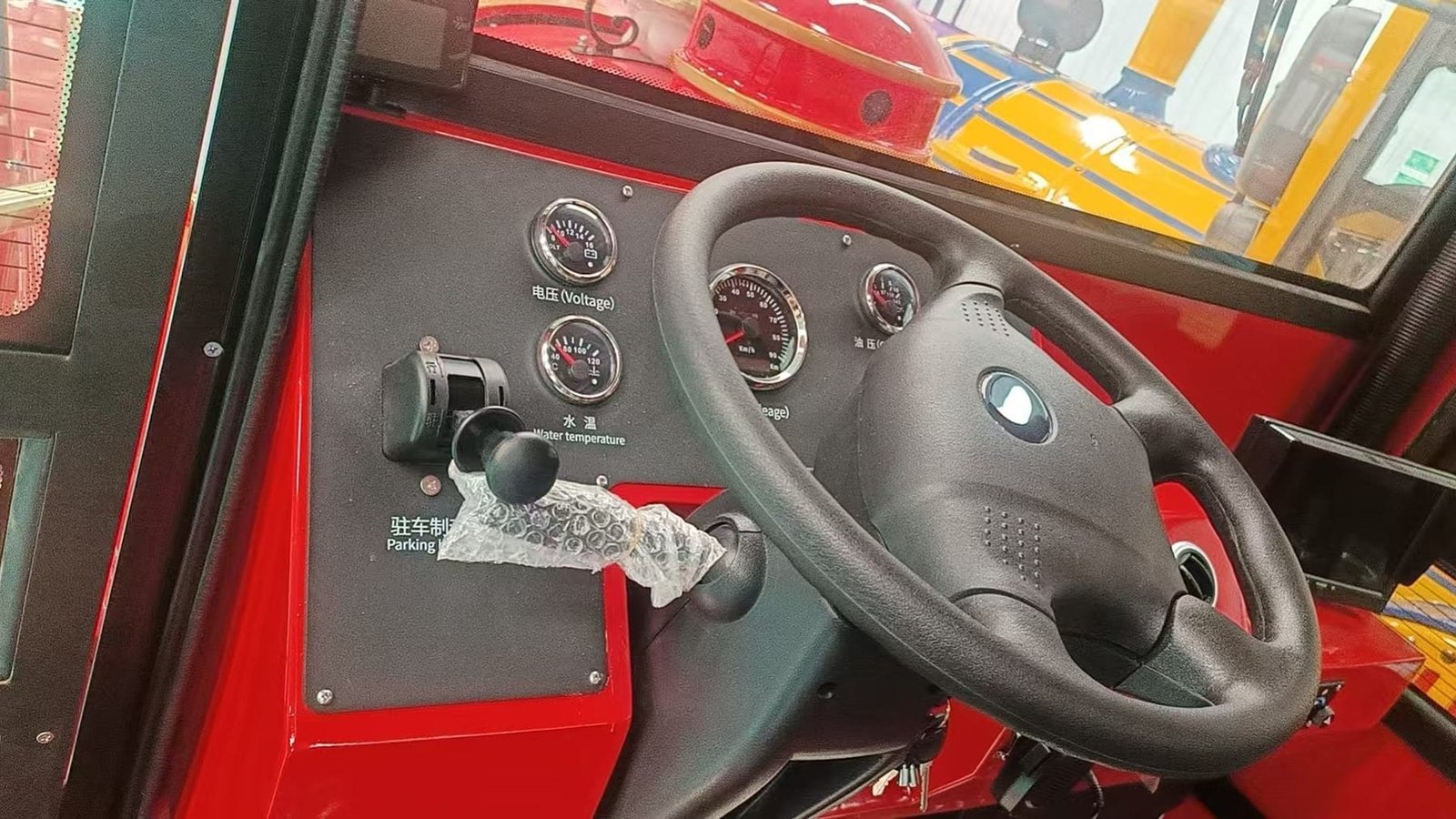
02If your train is battery-powered: the three battery papers
Lithium batteries are regulated dangerous goods at sea. No certificate, no booking — the shipping line's dangerous goods desk will simply refuse the container. Three documents cover it.
UN38.3 test summary and report
Confirms the battery passed the eight UN tests: altitude simulation, thermal, vibration, shock, external short circuit, crush, overcharge, forced discharge. For the 27-seat train's pack — two 76.8 V / 400 Ah LiFePO4 modules giving the 72 V-class 800 Ah system — the report was issued by an accredited lab, Shenzhen Boyuan Testing, report no. BYT202608A0000. All eight items: passed.
MSDS / SDS (Material Safety Data Sheet)
The chemistry passport: composition (LiFePO4, graphite, electrolyte), hazards under GHS, first-aid measures, handling and emergency phone. The shipping line reads it at booking; your customs broker and local fire authority may read it later. Ours run to 18 pages per battery model, prepared to GB/T 16483-2008 / ISO 11014.
Sea transport identification report
The classification document the carrier actually books against, issued under the IMDG Code (current amendment 42-24). For the assembled train it concluded: dangerous goods, UN 3556, proper shipping name BATTERY-POWERED VEHICLE or BATTERY-POWERED EQUIPMENT, Class 9. Issued for the complete train with battery installed — not just the cell in isolation.
03If your train is diesel: the emission certificate
Diesel replaces the battery paperwork with one heavy document: proof the engine meets the emission rules of your market.
For the United States, that is the EPA Certificate of Conformity under Section 213 of the Clean Air Act and 40 CFR Part 1039. The diesel trains we build for the US market use a Cummins QSF2.8 engine, engine family TCEXL02.8AAB, covered by EPA certificate TCEXL02.8AAB-002 for model year 2026 — issued 3 June 2025, valid through 31 December 2026, with a diesel oxidation catalyst as after-treatment.
Three things to check, whichever factory you buy from:
- Ask for the certificate number and expiry date. A real certificate has both; a vague "we have EPA" answer usually means the trading company has never seen it.
- Confirm it covers your build year. A model year 2026 certificate does not automatically cover a train built in 2027. Engines carry over, certificates renew annually.
- Match the engine family to your engine. The certificate lists an engine family (here, a 2.776-litre QSF2.8). If your PI says a different engine brand or displacement, the certificate in your drawer is decorative.
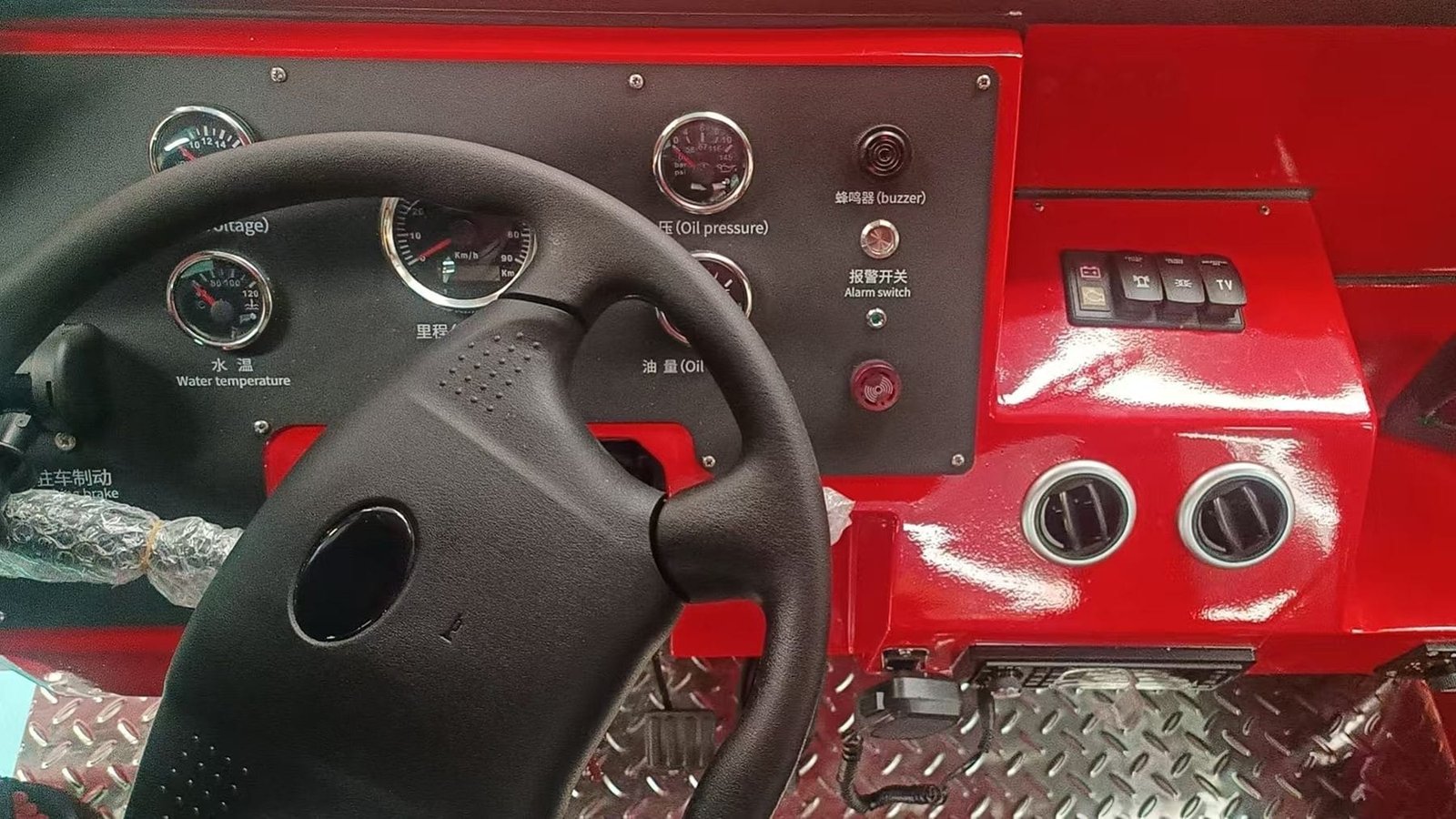
For other destinations: the EU and several other markets run their own non-road emission stages. Tell the factory your country before signing, and get the engine's documentation confirmed in the contract. It is a ten-minute email now and a four-week crisis later if skipped.
04Booking the shipment: what the freight forwarder will demand
This is the stage that surprises anyone importing a sightseeing train from China, because the forwarder asks questions that have nothing to do with trains and everything to do with dangerous goods procedure. Here is the actual list our forwarder works from, for a lithium battery train:
| # | What the forwarder needs | Why |
|---|---|---|
| 1 | Loading factory: name, address, city, postcode, phone, contact person | Must match the DGD at document cut-off |
| 2 | Actual consignee: same details | Same — any mismatch stops the release |
| 3 | Emergency contact at the port of loading, mobile number | Printed on the bill of lading |
| 4 | Emergency contact at the destination port, mobile number | Same; state which one to display |
| 5 | Product name in Chinese and English + HS code, per container | Customs classification both ends |
| 6 | Pieces, gross weight, net weight, dimensions per package | Feeds the DGD and the stow plan |
| 7 | Shipper / consignee / notify party details | B/L header |
| 8 | Inner packing details, marine pollution (yes/no), flash point if any | IMDG declaration fields |
On top of this the carrier (MSC, in our case) requires an IMDG application form: UN number, IMO class, proper shipping name, technical name, net and gross weight, packing codes. The forwarder assembles these into the Dangerous Goods Declaration (DGD). Consistency is the whole game: the DGD, the booking, the B/L and the identification report from section 02 must agree, name for name, number for number.
Worked example · real shipment, 2026
27-seat trackless electric train, Qingdao → Arica
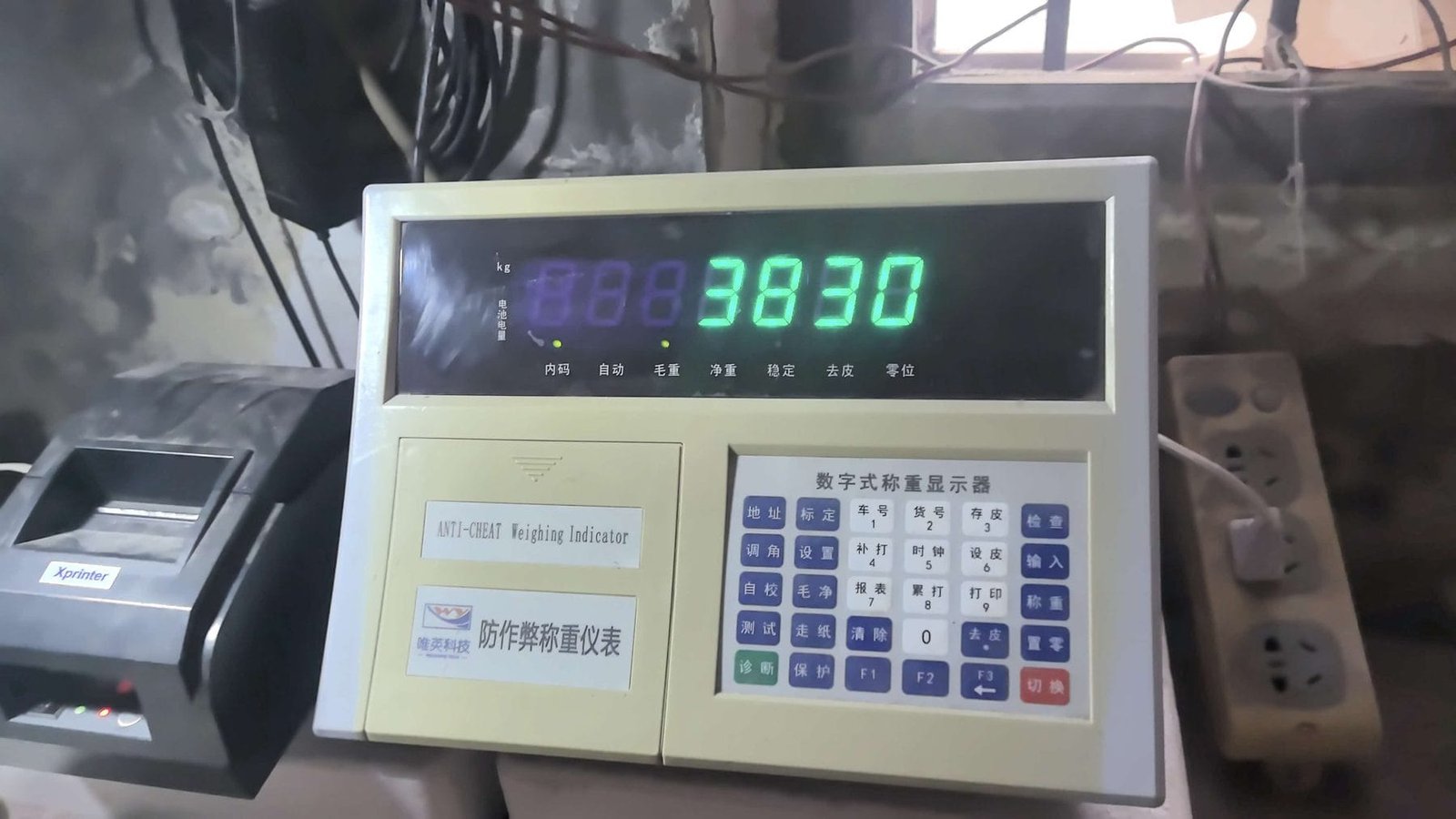
A Bolivian operator (AVDEL SRL, Santa Cruz) bought the 27-seat lithium train CIF Arica — Arica in Chile being the ocean gateway for landlocked Bolivia. The booking read: 1 × 40 ft container, 4 packages, lithium battery trackless sightseeing train, HS 9508.30, gross weight 3,860 kg, volume 48.8 CBM. Shipper: Kaifeng Jinhui Amusement Equipment. Every one of those numbers came from the PI, the packing list and the weighbridge above — which is why the container moved on the first booking.
05When the container opens: getting to first ride
The last set of papers arrives with the container. Check them off before the truck leaves:
- Commercial invoice and packing list — your customs broker values the goods from these; make contents and weights match what is inside.
- Bill of lading — telex release or original, consignee spelled as agreed months earlier.
- Copies of the battery and emission certificates — keep them with the machine's file. Insurance, inspectors and (occasionally) port police ask years later.
- Unpacking inspection with photos — ideally with the insurance surveyor present. Note any transit damage on the delivery receipt before signing.
- Commissioning — charge state after sea transit, brake function, interlocks between locomotive and carriages, lights, PA. We include a commissioning checklist and operating videos with every export order.
- Spare parts box — fuses, contactors, bulbs, tyres as agreed. Count it against the packing list the same day.
06Questions buyers ask about the paperwork
Who arranges and pays for the battery reports?
The factory does. Each battery model is tested once at an accredited lab and the report serves every shipment using that model. The cost sits in our production overhead, not on your invoice — but always confirm in the PI that the factory supplies UN38.3, MSDS and the transport identification report for your build.
How long does UN38.3 testing take?
For the 76.8 V / 400 Ah LiFePO4 module: samples reached the lab on 20 August 2026, the report was issued on 11 September — three weeks. Plan the same window if a brand-new battery model enters your order. If your supplier quotes an existing model, the report already exists and costs you zero days.
My forwarder says lithium trains "cannot ship". Is that true?
They ship every week — as Class 9, UN 3556, with the documents in section 02 and a forwarder who handles dangerous goods. The phrase usually means the forwarder lacks a DG desk. Either switch forwarders or buy CIF and let the factory's forwarder carry it, as our Bolivia client did.
Do I need CE marking?
Depends on your destination and how the ride is classified there. Tell us the country at enquiry stage and we confirm which marks and standards apply, and whether the model can be built to them. It belongs in the contract, not in a conversation at the port.
Can I use my own battery or engine brand?
Sometimes — but then the certificates must be re-issued in that brand's name, on your timeline and your budget. In practice it is faster to use the factory's certified, field-proven pack and engine, which already carry the paperwork.
Tell us your country and power choice — we'll send the exact document list
Battery or diesel, FOB or CIF, which port — three facts change the paperwork completely. Send them over and we reply with the specific certificate set, who provides each one, and a realistic timeline from deposit to first ride. No brochure, no guesswork.
Request the document checklistOr start with the machines themselves: trackless sightseeing trains · models & price guide
Written by the export team at Kaifeng Jinhui Amusement Equipment Co., Ltd. (JHRides), Kaifeng, Henan. All certificate numbers, weights and shipping details in this article are taken from our real 2026 orders and may be verified on request.