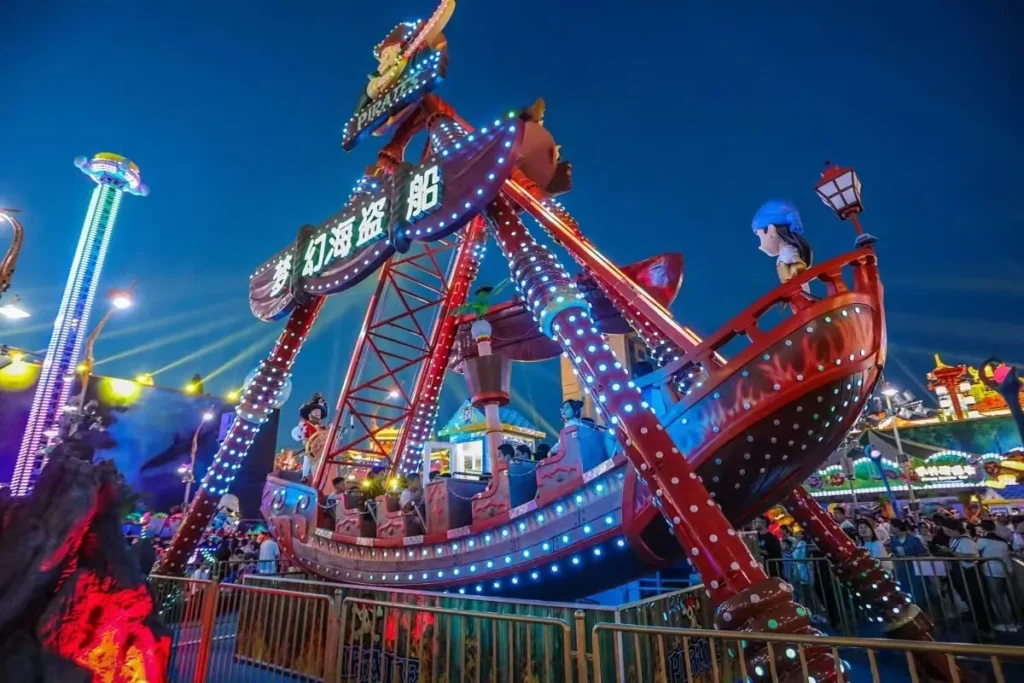
A 24-seat fiberglass pirate ship from a Chinese factory costs roughly US$23,000–32,000 EXW, needs a 14 × 10 m footprint with a 10 m A-frame, and takes about 4–6 weeks to build. A 12-seat mini version starts near US$5,000. A 36-seat park model runs US$45,000–58,000. If you are comparing suppliers right now, this guide gives you the actual spec sheets behind those numbers, the container math, and the six things every quote must state — so you can tell a real pirate ship ride manufacturer from a trading company in one read.
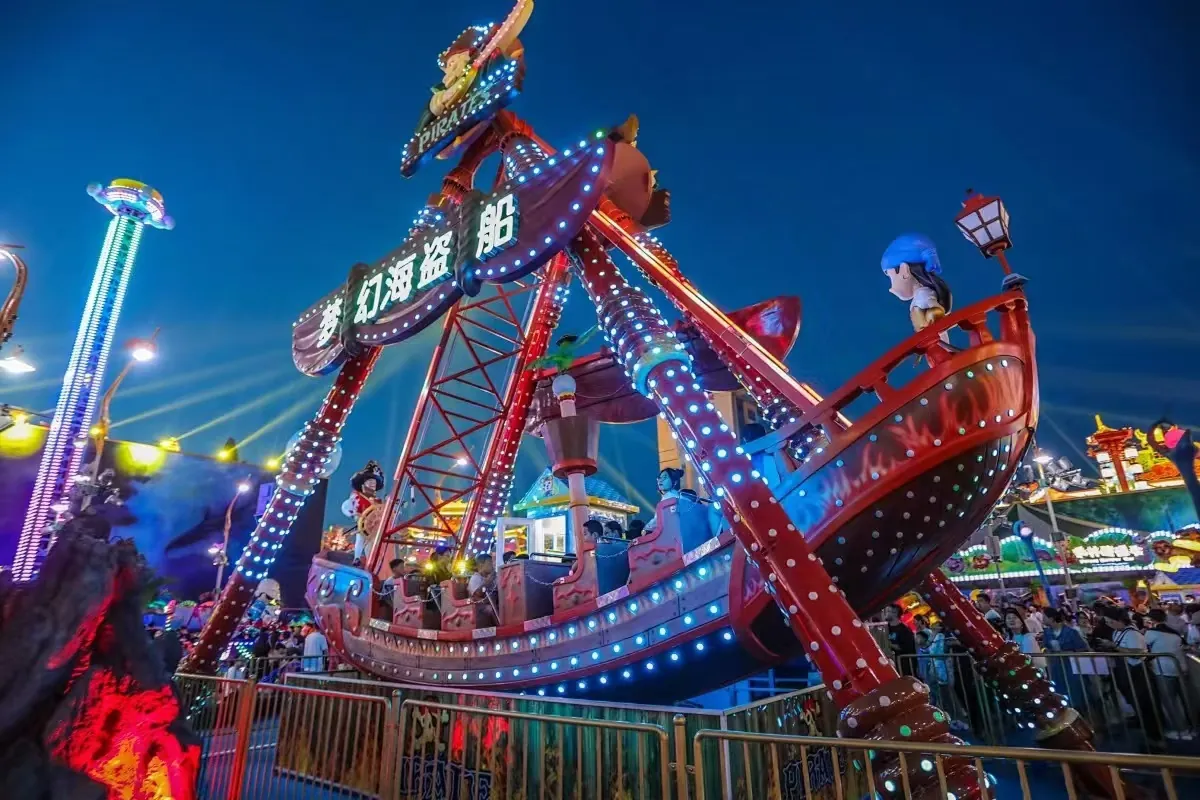
You’ll see this ride listed under several names: pirate ship ride, swing ship ride, viking ship, or pirate boat ride. Same machine: an A-frame gantry, a suspended boat hull, and a drive system that swings it progressively higher. What separates suppliers is not the concept — it’s whether the steel, the drive and the safety system are engineered or improvised.
Start With the Size, Not the Price
Pirate ship rides are priced by seat count. Here is our actual line-up with real production specs, so you can match one to your site before you ask for prices:
| Model | Seats | Site area | Height | Max swing | Top speed | Power | Shipping | EXW price range* |
|---|---|---|---|---|---|---|---|---|
| Mini (steel hull) | 12 | 4 × 7 m | 1.8 m swing height | — | 1.5 m/s | 3.3 kW | 1 × 20’GP | $4,500–6,500 |
| Mini (FRP hull) | 12 | 5 × 7 m | — | — | — | 3.5 kW | 1 × 20’GP (packs at 4.2 × 2 × 2.1 m) | $5,500–7,500 |
| Trailer-mounted | 16 | 12 × 8 m | — | — | — | 6 kW | Towable, no container | $13,000–17,000 |
| HDC24 (FRP) | 24 | 14 × 10 m | 10 m | 60° | 8.9 m/s | 15 kW VFD motor | 1 × 40’HQ | $23,000–32,000 |
| Large (FRP) | 32–36 | 18 × 9.5 m | 14.5–15 m | 45–60° | 11.3 m/s | 38–42.5 kW total | 2 × 40’HQ | $45,000–58,000 |
| Big custom | 40+ | 18 × 10 m | 16 m | — | — | Per design | 2 × 40’HQ + 1 × 20’GP | $65,000–90,000 |
* EXW China, reference ranges only. Final price depends on theming, hull material, LED package and optional trailer. Ask us for a formal quote.
The 24 seats pirate ship ride is the size most buyers settle on — it fits a mid-size park, clears one 40′ high-cube container, and pays back fastest per dollar invested. The 36 seats pirate ship ride is the step-up for regional parks that need throughput; note its safety envelope reaches 26 × 9 × 15 m, so check your boundary fence line before falling in love with it.
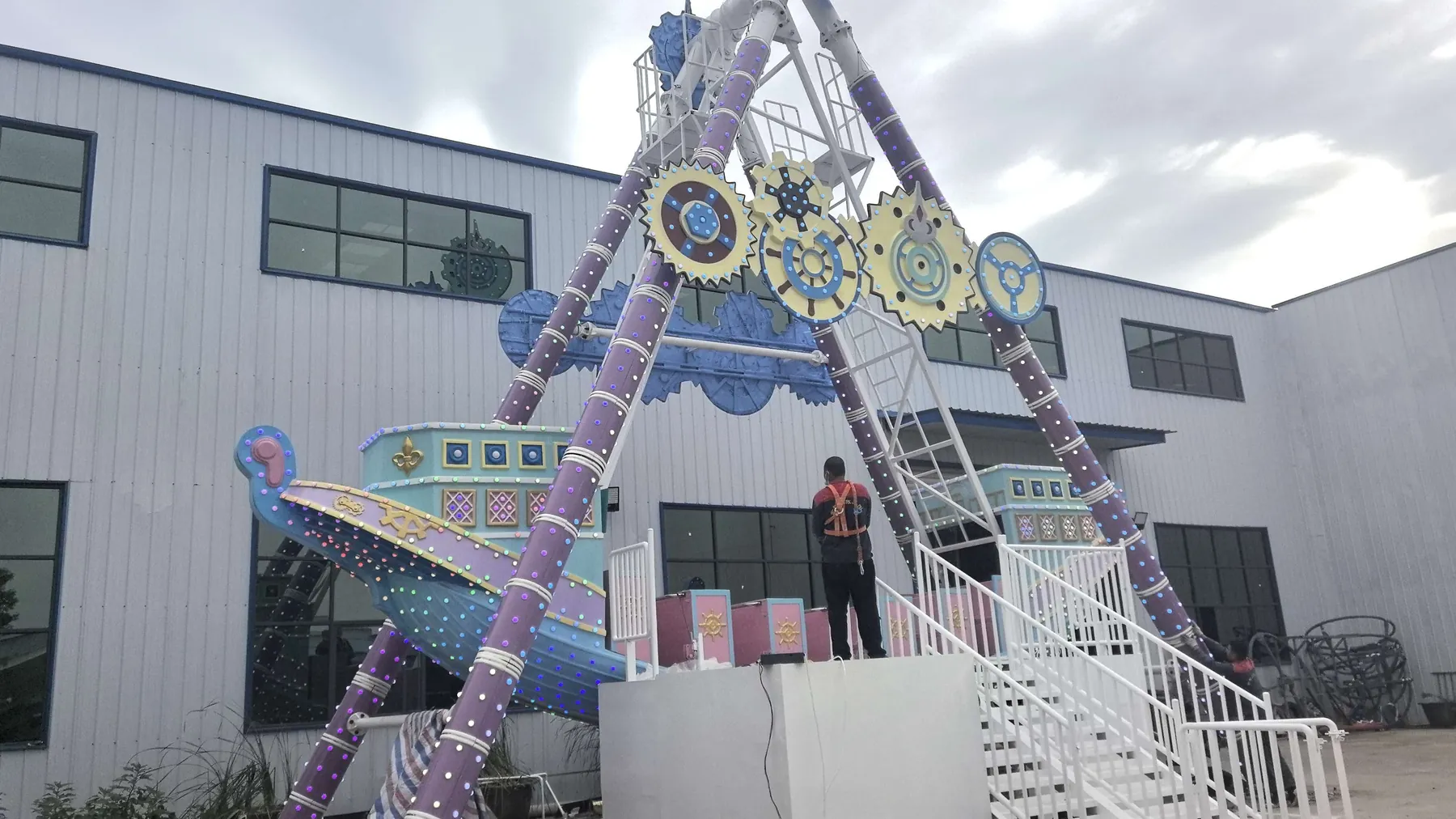
FRP Hull or Steel Hull?
Two ways the boats are built, and the price gap between them is real:
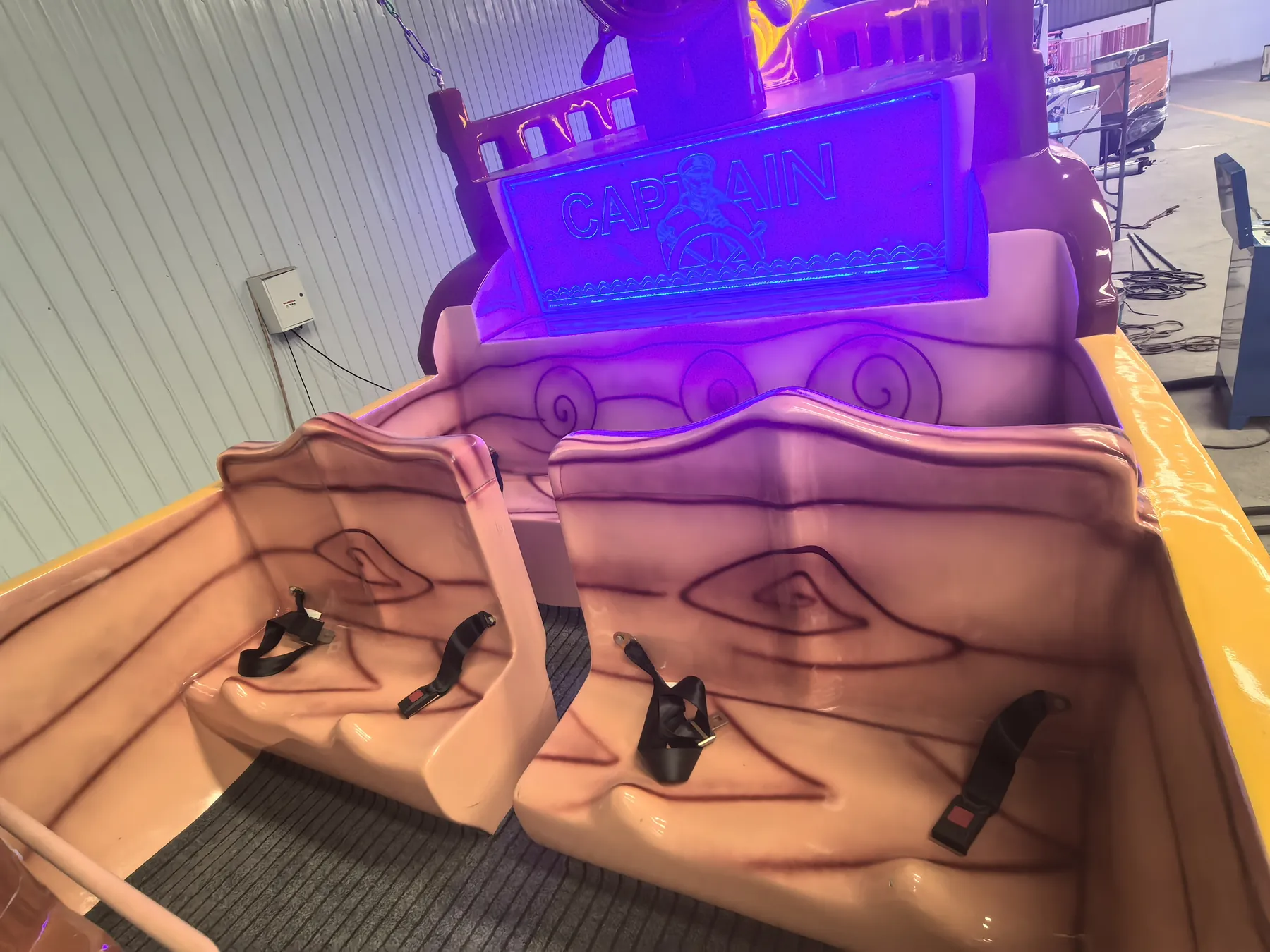
- Fiberglass (FRP) — molded hull with themed sculpture, automotive-grade gelcoat finish, seat belts per row. This is what parks buy. It is also what the 24-seat and 36-seat specs above are based on.
- Steel plate hull — welded, simpler paint, roughly 30–40% cheaper at the 12-seat size. Fine for carnival operators who move often and repaint yearly; it looks utilitarian next to an FRP boat.
One practical note: FRP costs more upfront but holds theme-paint and resale value far better. If your business model is a permanent park, FRP pays for the difference. If you tour fairs, see the trailer option below.
What a Real Quote Looks Like (EXW vs FOB vs CIF)
This is where most buyers overpay — not on the machine, but on terms they didn’t read. When you request a price from any pirate ship ride manufacturer, the quote must state all six of these:
- Incoterm — EXW, FOB (Chinese port) or CIF (your port). A price without an Incoterm is meaningless.
- What’s included — control cabin, passenger platform with stairs, fencing, spare parts kit, LED/music package. These are line items, not freebies.
- Voltage and frequency — our standard is 3N+PE / 380 V / 50 Hz. If your country runs 60 Hz or 220/415 V, say so before the contract, not after.
- Production time — typically 25–40 days for a 24-seat; longer for custom theming.
- Packing plan — which containers, how the A-frame and hull are fixed, packing dimensions. You need this for your port agent.
- Documents — commercial invoice, packing list, bill of lading; certificate of origin on request. Design documentation (calculation book, electrical manual, test plan) is available in English.
Site Prep: Foundation, Power and Weather Limits
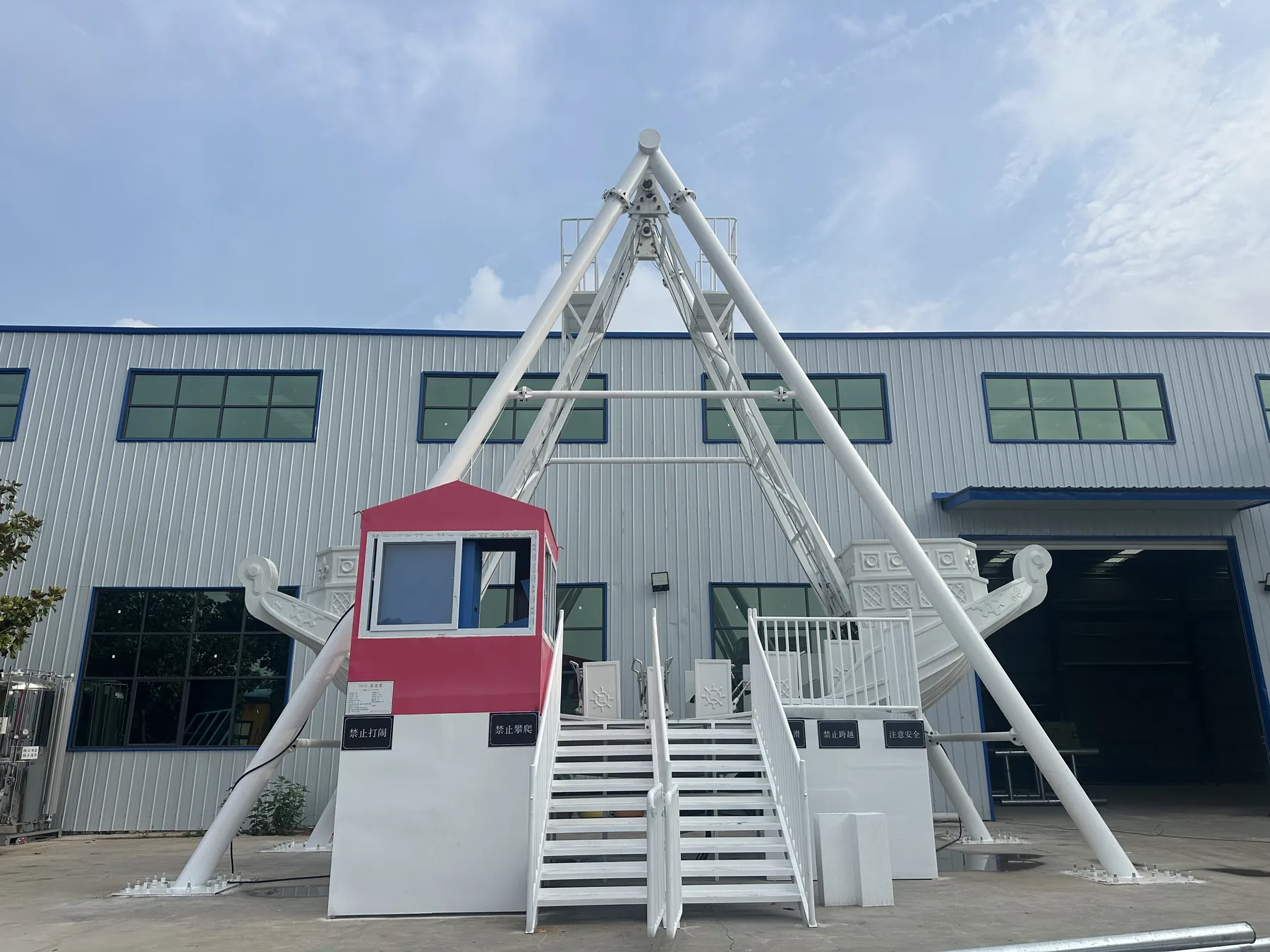
The pirate ship is a foundation ride, not a plug-and-play one. Before the container lands, prepare:
- Concrete foundation with anchor bolts — we supply the foundation drawing with bolt positions; the base needs secondary grouting after leveling. Curing time is the hidden schedule killer, so pour early.
- Power — 380 V three-phase for the 24-seat (15 kW) and up. The 12-seat mini still wants 380 V but only draws 3.3–3.5 kW.
- A crane — the A-frame gantry is erected in one lift. Plan the crane access before delivery day.
- Lighting — passenger walkways need ≥ 60 lux, emergency lighting ≥ 20 lux, per the design spec.
How the Design Is Actually Verified (Ask Any Supplier This)
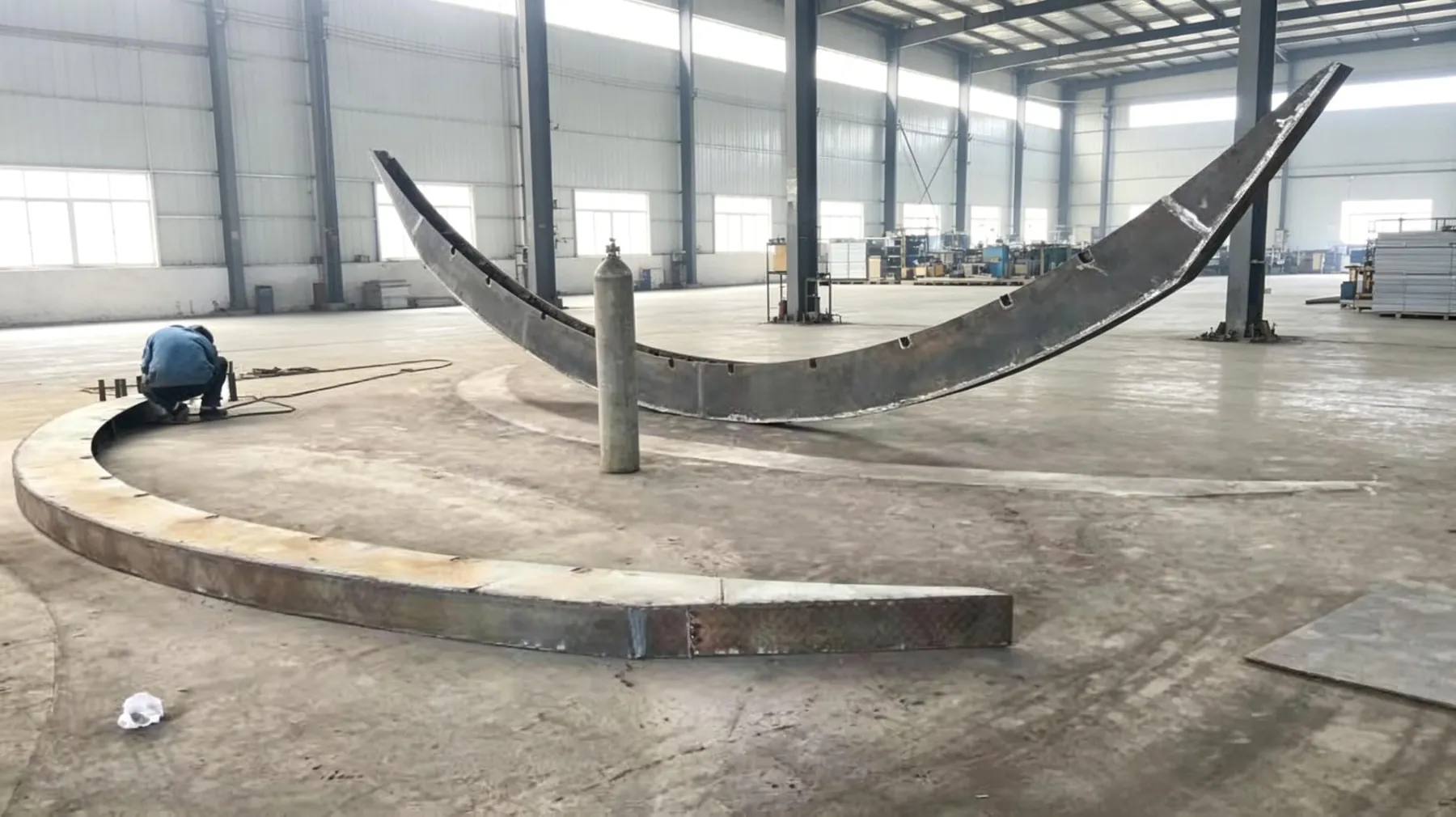
Here is the question that separates a factory from an assembler: “Show me the design calculation and how passenger acceleration limits were verified.”
Every HDC24 we build ships with three engineering documents:
- Structural calculation book — finite-element simulation under full load plus front-rear and left-right unbalanced load cases, checking hull stress, arm stiffness and stability, with passenger inertia acceleration judged against the limits in GB 8408-2018 (China’s national amusement ride safety standard, comparable in intent to EN 13814).
- Electrical design specification — breaker, contactor and VFD selection, cable sizing calculations, residual-current protection (RCD) and grounding scheme, plus the safety interlock and limit switch design.
- Verification test plan — the acceptance tests the ride passes before leaving the factory.
The safety chain on the 24-seat model: PLC automatic control, pneumatic drive braking, and pneumatic-locked safety lap bars — the bars cannot unlock while the boat is in motion. Design service life is 15 years. If a supplier cannot produce an equivalent calculation book, they are selling you a welded guess.
What It Costs to Run Each Day
Budget honestly, because this number decides your ticket price:
- Electricity: the 24-seat draws 15 kW at peak, but the VFD averages well below that across a ride cycle. Plan on 60–100 kWh per operating day (roughly $8–15/day at $0.12–0.18/kWh).
- Staff: one operator, one attendant at the queue on busy days.
- Maintenance: daily visual checks, weekly lubrication of the suspension pins, quarterly gearbox oil, annual NDT of the main welds. Spare parts kit ships with the ride.
Need to Move It Between Fairs? Buy the Trailer Version
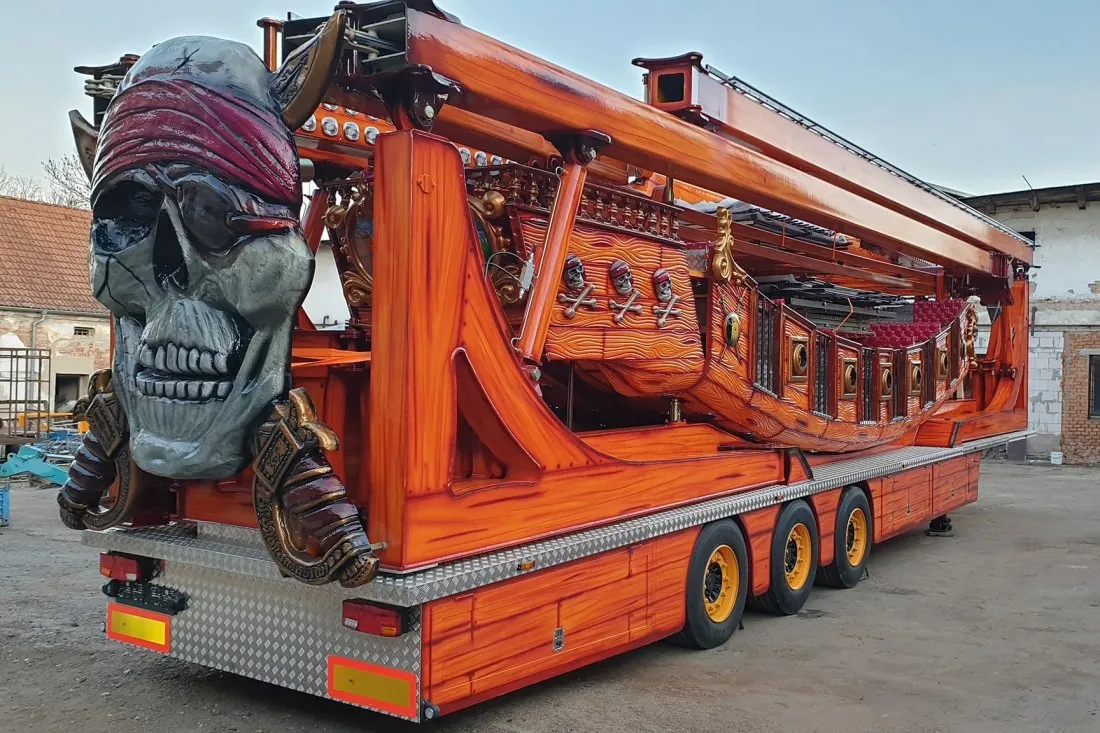
If you operate a pirate ship ride for carnival circuits rather than a fixed park, the trailer-mounted 16-seat version changes the economics: no foundation, no crane, no containers. It folds onto its own tri-axle trailer (about 3 t, 8.7 × 2.2 × 2.8 m packed), tows between fairs, and sets up on any level pad of roughly 12 × 8 m. See the dedicated trailer-mounted pirate ship ride page for photos and specs.
A Recent Export Case, Anonymized
Late in 2025 we quoted a European buyer for a large FRP ship in the 18 × 10 × 16 m class. The deal illustrates every number above working together:
- Machine: big FRP pirate ship, full theming, LED package — EXW price in the high-$60,000s.
- Freight: 2 × 40’HQ + 1 × 20’GP to the Antwerp/Rotterdam range — about $9,500.
- CIF total: mid-$70,000s, documented on the commercial invoice line by line.
Nothing in that quote was hidden, and that is the standard to hold every supplier to.
Before You Pay a Deposit: the 7-Question Checklist
- Seat count and site envelope — does the 26 × 9 × 15 m safety envelope of the 36-seat model clear your boundary?
- Hull material — FRP or steel, and how many belt rows per cabin?
- Drive — VFD motor power, braking method (pneumatic is what the HDC24 uses), control system (PLC).
- Documents — calculation book, electrical spec and test plan in English: yes or no?
- Packing plan — exact containers and fixing method, with dimensions.
- Voltage/frequency match for your country.
- Spares — what’s in the kit, and the promise on parts availability after year 5.
Frequently Asked Questions
How much does a pirate ship ride cost?
EXW China reference ranges: 12-seat mini $4,500–7,500; 16-seat trailer version $13,000–17,000; 24-seat FRP $23,000–32,000; 32–36-seat $45,000–58,000; large custom 40+ seats from $65,000. Add 10–20% for ocean freight, insurance and port charges to get your landed cost.
What power supply does it need?
Standard is 3N+PE / 380 V / 50 Hz. The 24-seat draws 15 kW, the 36-seat 42.5 kW total (including a 3 kW air compressor). 60 Hz markets (USA, Philippines, parts of the Middle East) must be flagged at order time so motors and the VFD are specified correctly.
How long from deposit to shipping?
Typically 25–40 days production for a 24-seat, longer for custom theming or peak season (Chinese New Year, summer). Ocean transit adds 20–40 days depending on destination.
Do you send engineers to install?
The ride ships with English installation manuals, foundation drawings and wiring diagrams, and our engineers guide your crew by video call through erection and commissioning. Most 24-seat installations complete in 1–2 weeks with a local crane and 4–6 workers, plus foundation curing time.
Can children ride with adults?
Yes on the 24-seat and larger models — the lap bars and belt rows accommodate mixed seating. The 12-seat mini is designed primarily for children at 1.8 m swing height and gentler speeds.
What documents do I need for customs?
Commercial invoice, packing list and bill of lading as standard; certificate of origin on request. If your country requires type-approval for amusement devices, tell us before ordering — the design documentation package (calculation book, electrical spec, test plan) is what your local inspector will ask for.
Get a Factory-Direct Quote
Tell us your seat count, site size and country — you’ll get a line-item quote with the container plan and freight estimate, usually within 24 hours.
Or email kfjhyl@jhrides.com — Kaifeng Jinhui Amusement Equipment Co., Ltd, Henan, China.
Related reading: Pirate Ship Ride for Sale — full model range · Pirate Ship Rides Collection (mini to 42-seat) · 32-Seat Pirate Ship specs · Mobile Bumper Cars for Sale · Importing Amusement Rides: the Documents You Need