Most people who start an amusement park business buy the wrong first ride — not because the ride is bad, but because it does not match their budget, their site or their crowd. The seven rides below are the ones that consistently earn their keep in small and mid-size parks across Africa, the Middle East, Southeast Asia and Latin America, priced from our own 2026 export list.
The short version: a workable starter cluster of three to four rides costs US$40,000–60,000 EXW plus freight. A mid-size park with the full seven lands at $130,000–200,000. Every number on this page is EXW Kaifeng, converted from our factory price list — not from a broker’s catalogue.
Because we are the manufacturer, we will also tell you what we cannot promise: we know exactly what a ride costs and what it can carry, but only your site decides how many visitors show up. The payback section shows the math with honest assumptions, so you can plug in the visitor numbers from a park near you instead of trusting ours.
The 7 Must-Buy Rides for a New Amusement Park
Each of these seven does a different job: one pulls families through the gate, one keeps them riding, one gives teenagers a reason to come back, and one makes the park visible from the road. Skip one and you usually notice it in the revenue mix within the first season.
1.Carousel — the traffic anchor
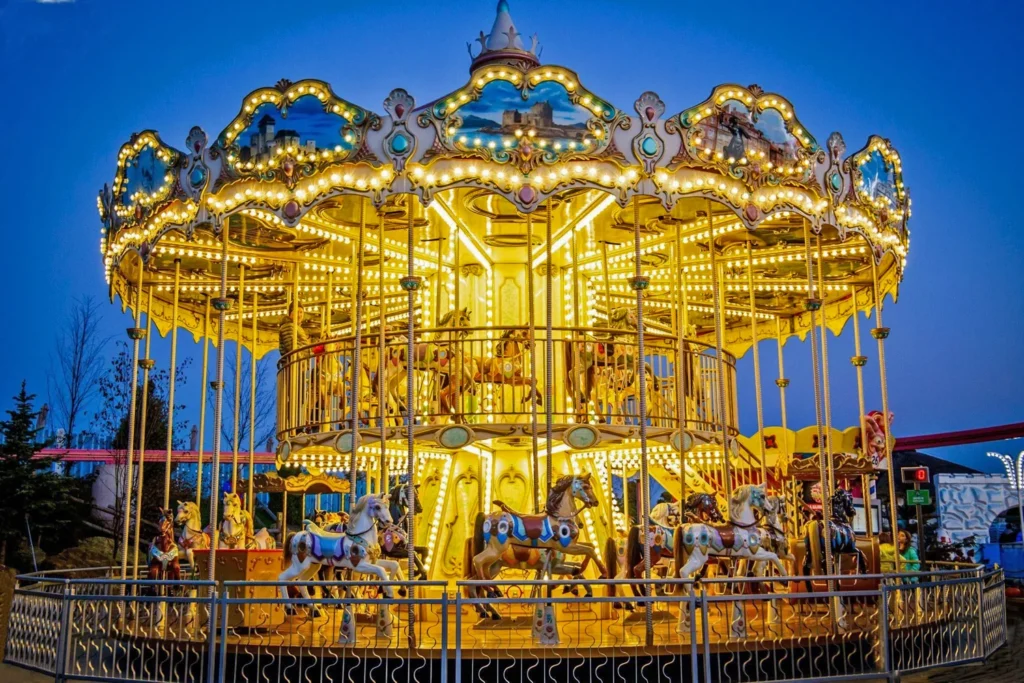
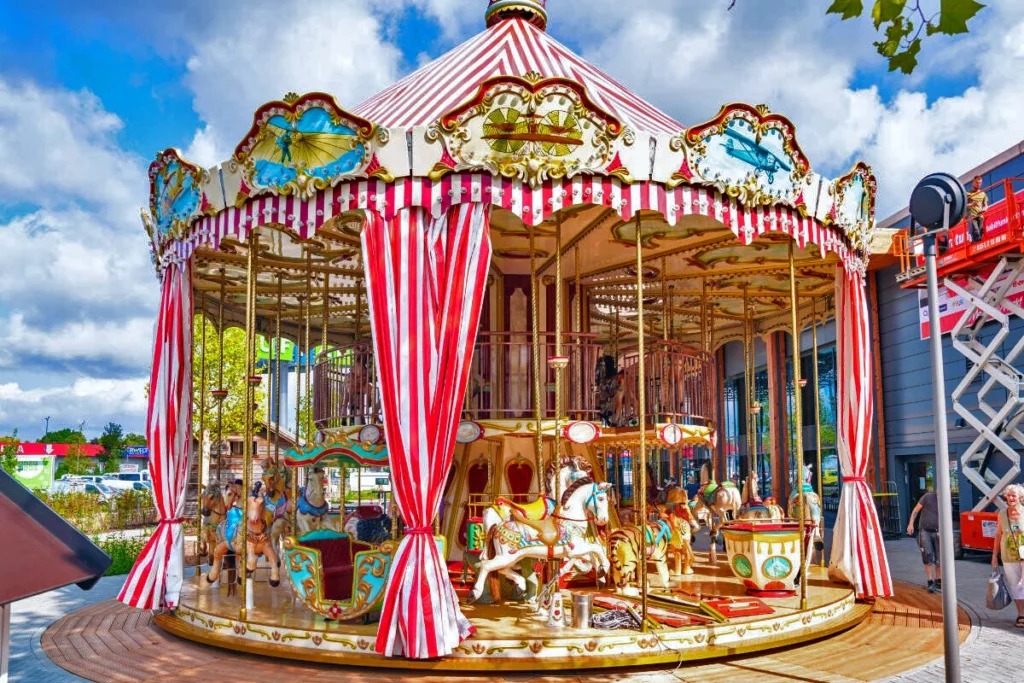
A carousel is the first ride most parks install because it sells to every age group and needs only 3 kW. A 16-seat model fits a 6 m circle and costs $6,500–9,500 EXW; the 24-seat version on a 7.5 m deck runs $18,000–20,000. For a mall plaza or a scenic-spot corner, 16 seats is enough. For a destination park, the double-deck 10 m model is the photo people came for.
2.Bumper cars — the ride people queue for twice
Bumper cars have the highest re-ride rate of anything on this list, which is why the arena usually produces the second revenue line after the carousel. A battery-powered 2-seater car costs $900–1,100. A complete 12-car floor-grid arena — floor, fence, power system and cars — lands at $65,000–75,000 turnkey.
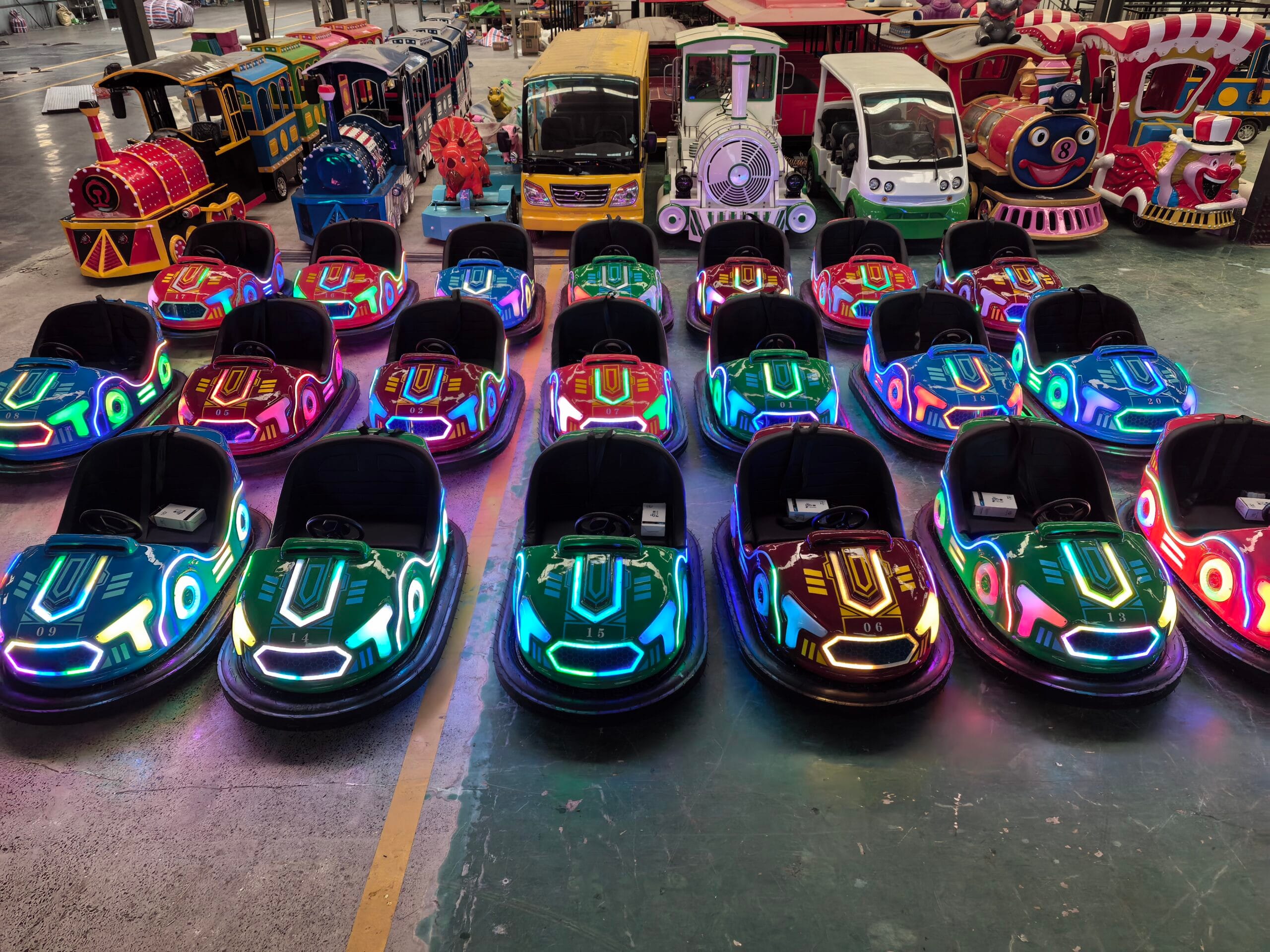
If your site moves with the season, it is worth reading about our hydraulic folding bumper car arena — the same revenue, but it folds onto a trailer in minutes.
3.Pirate ship — the cheapest thrill you can buy
Per dollar of “scream”, nothing beats a pirate ship. A 12-seat mini costs $4,500–7,500 and fits a 5 × 7 m plot. The 24-seat fiberglass version swings at 60° from a 10 m A-frame for $23,000–32,000, draws 15 kW at peak, and uses roughly 60–100 kWh per operating day.
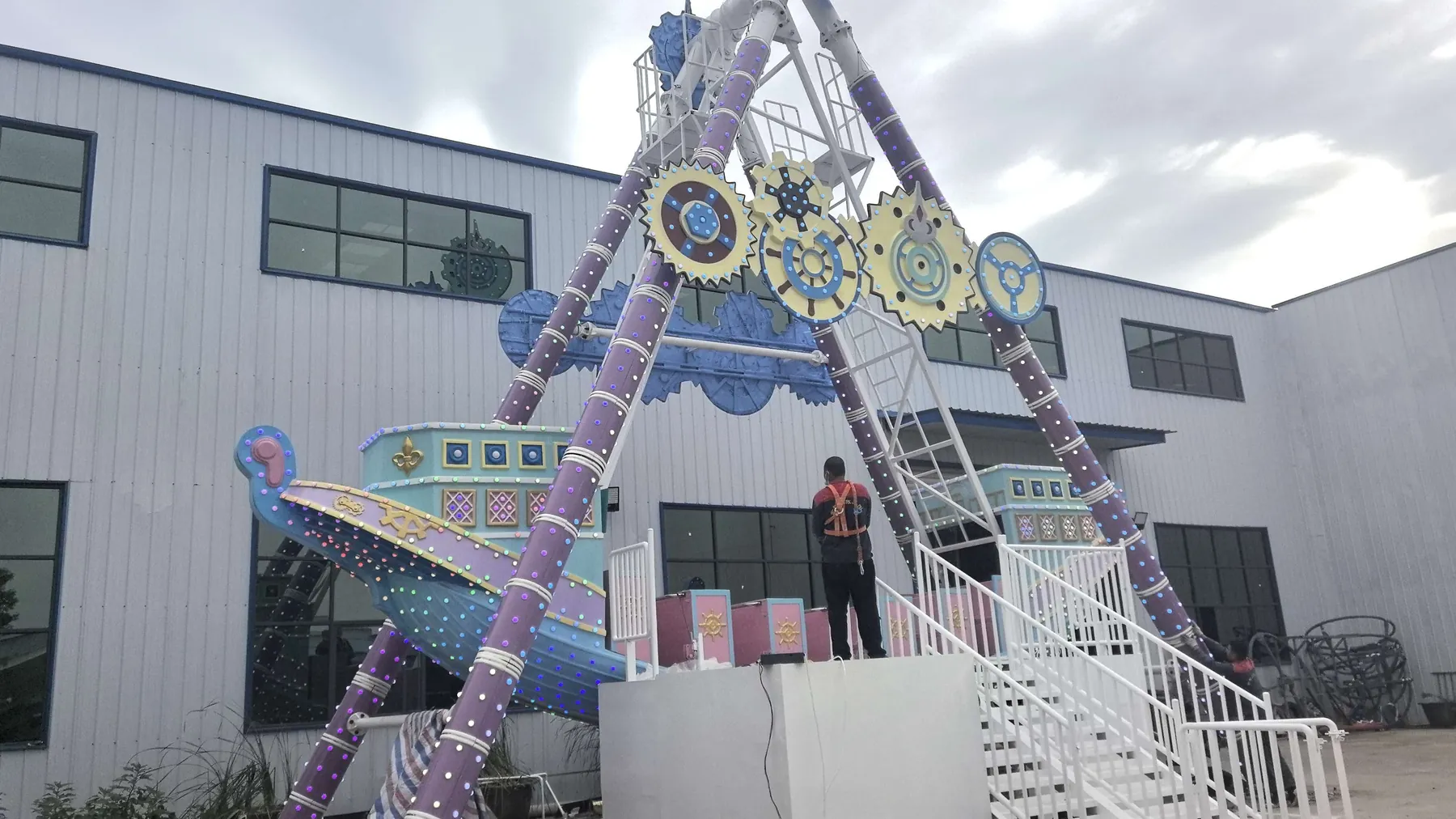
Pirate ship models, specs and a real CIF invoice
4.Flying chair ride — the landmark seen from the gate
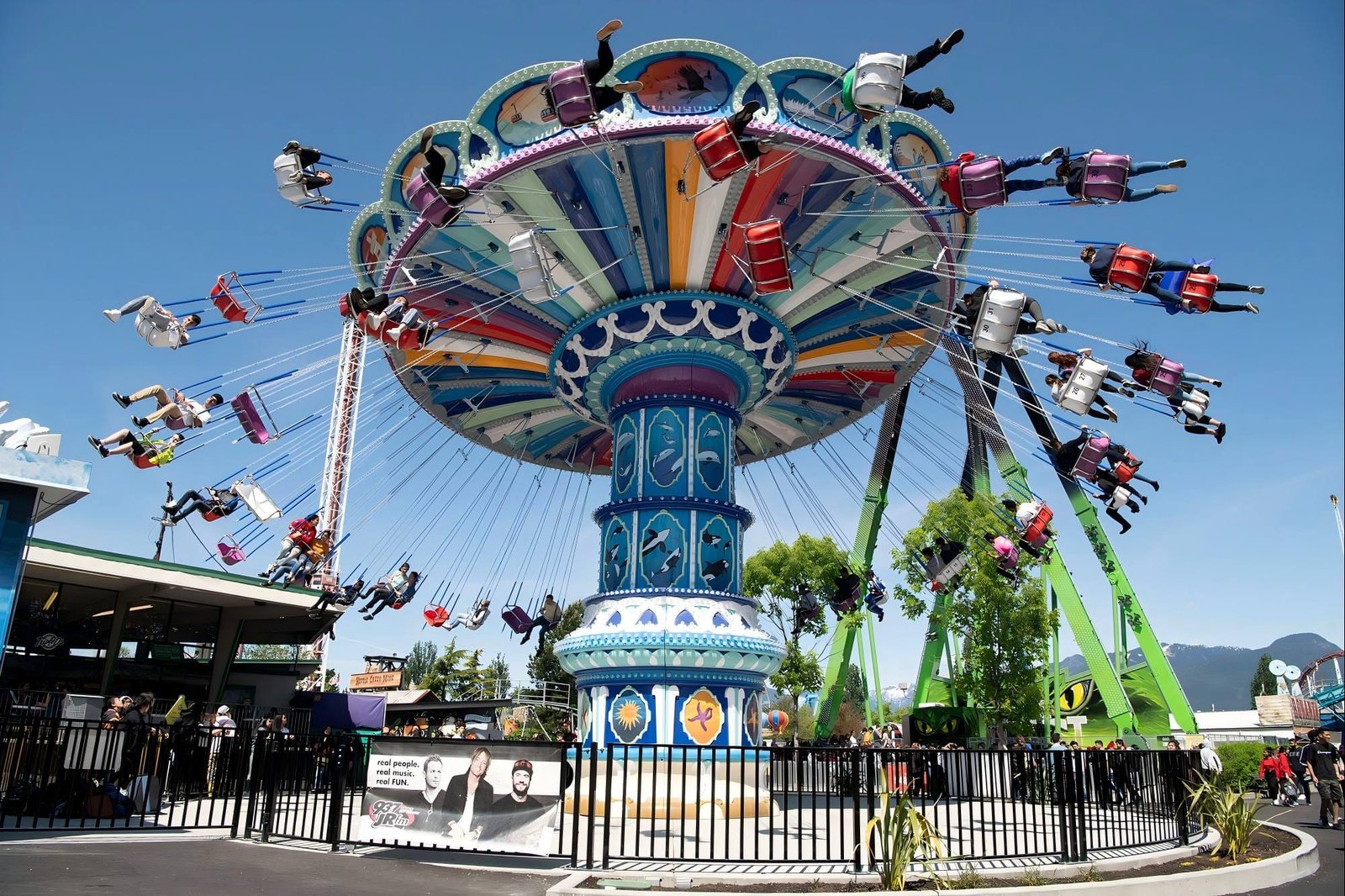
Height sells tickets. A 16-seat swing ride on an 8 m diameter costs $13,500–17,000 with a 4 kW drive; the 24-seat version, with riders flying 2.8 m out from the centre, runs $17,000–21,000. Because the chairs lift above the fence line, it works as advertising you only pay for once.
5.Tagada (disco ride) — the group laughter machine
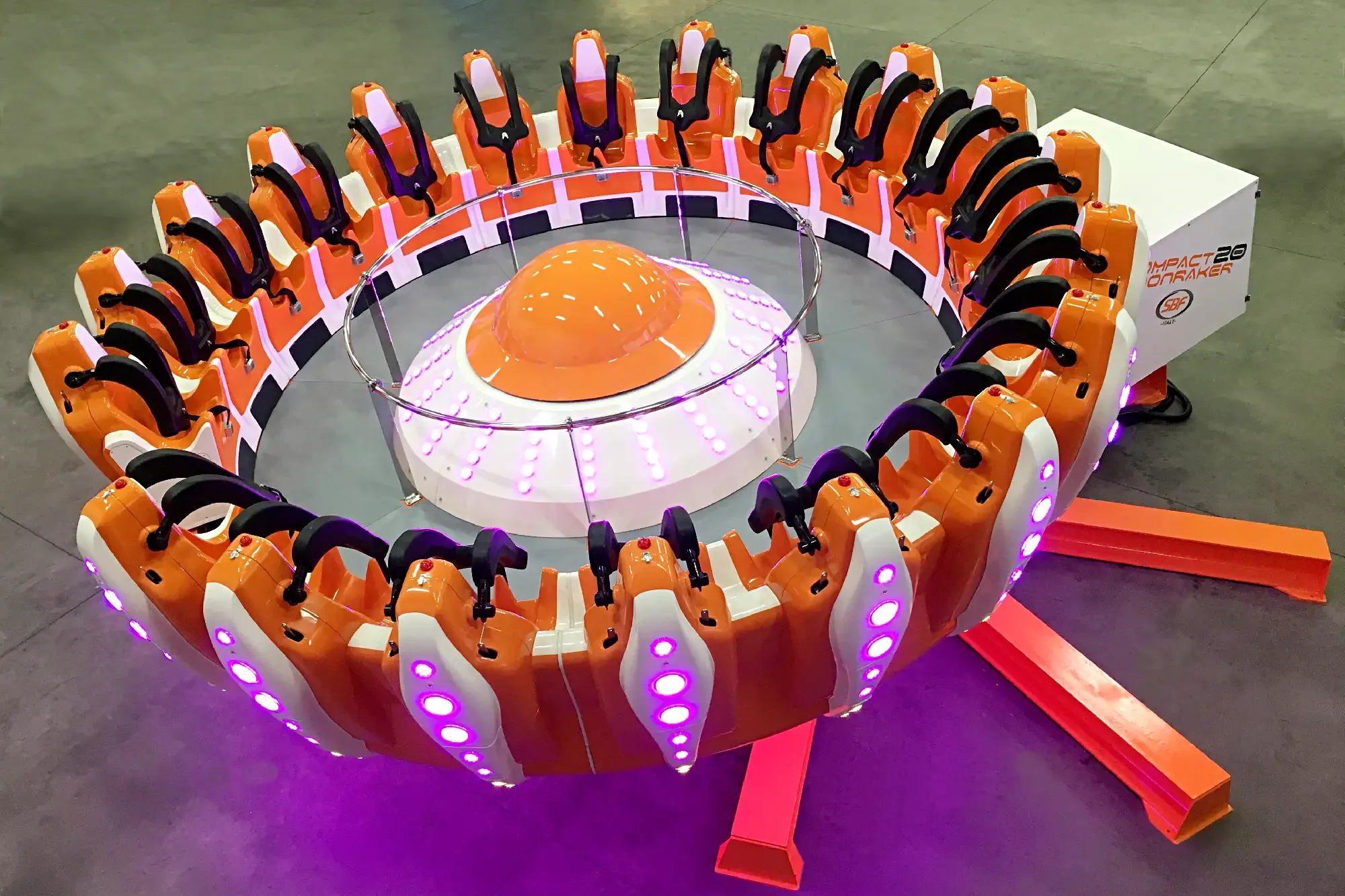
A tagada has no restraints to slow loading, so it turns a big group around fast and fills itself from the queue watching. Prices scale with the disc: 3 m / 12 seats ≈ $10,500; 4 m / 18 seats ≈ $12,000; 5 m / 24 seats $16,000–17,600; 6 m / 32 seats ≈ $18,300 but it needs a 12 × 14 m plot and 27.5 kW.
6.Self-control plane — the kids’ zone workhorse
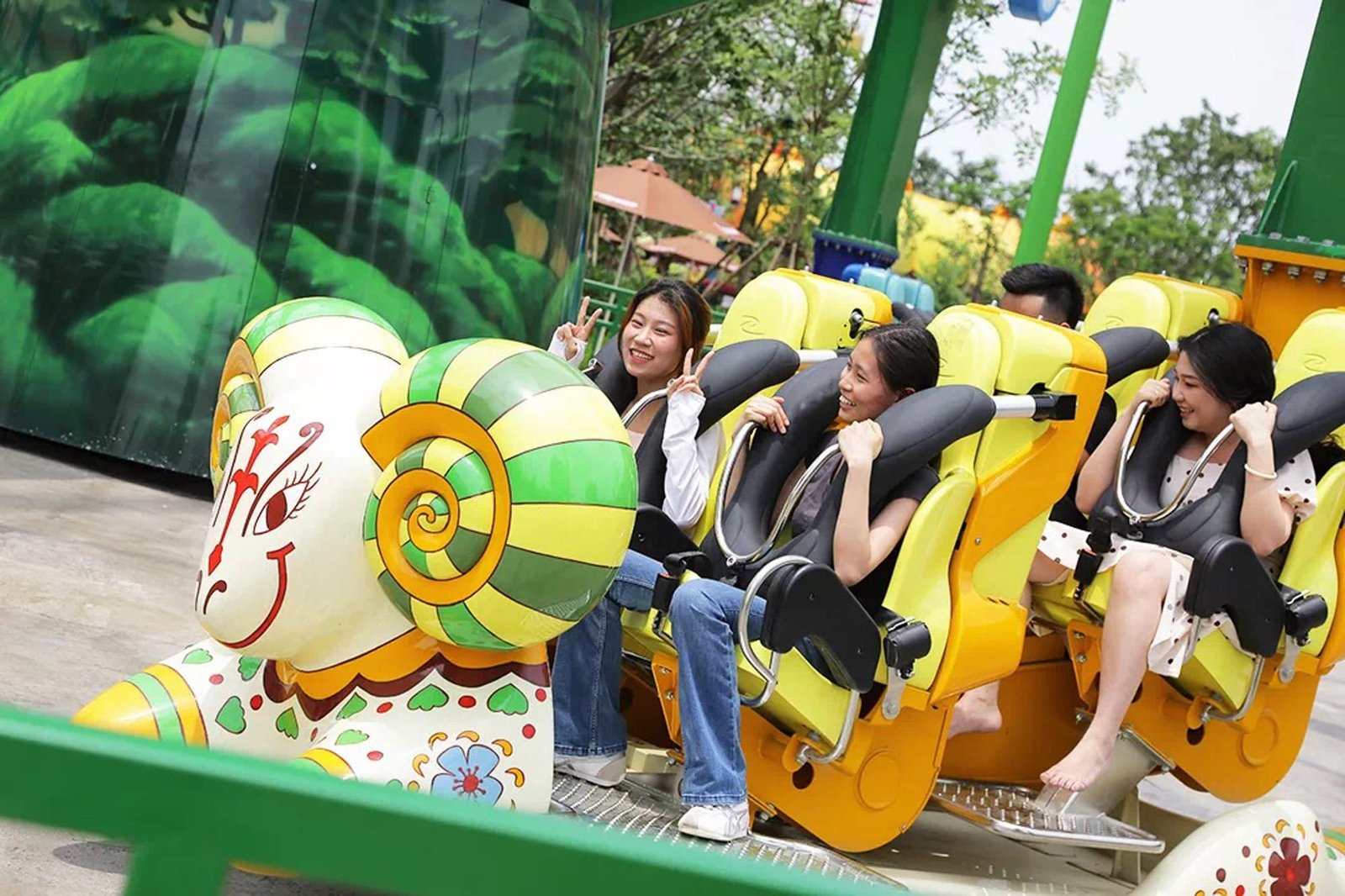
Parents ride with children aged 3–10, and each car has its own up-and-down control, which keeps the kids busy and the parents photographing. A 16-seat, 8-arm model needs an 8 m circle and 6 kW, and costs $9,600–12,800. The 11 m diameter, 6.3 m tall version with 11 kW runs about $12,800.
7.Sightseeing train — the ride that sells the whole site
In zoos, resorts and scenic areas, the train is often the single biggest revenue line, because it carries the visitors who would otherwise walk past the rides. A 13–24 seat lead-acid train starts at $9,000; a 27-seat lithium version runs $28,000–48,000 and holds a full operating day on one charge.
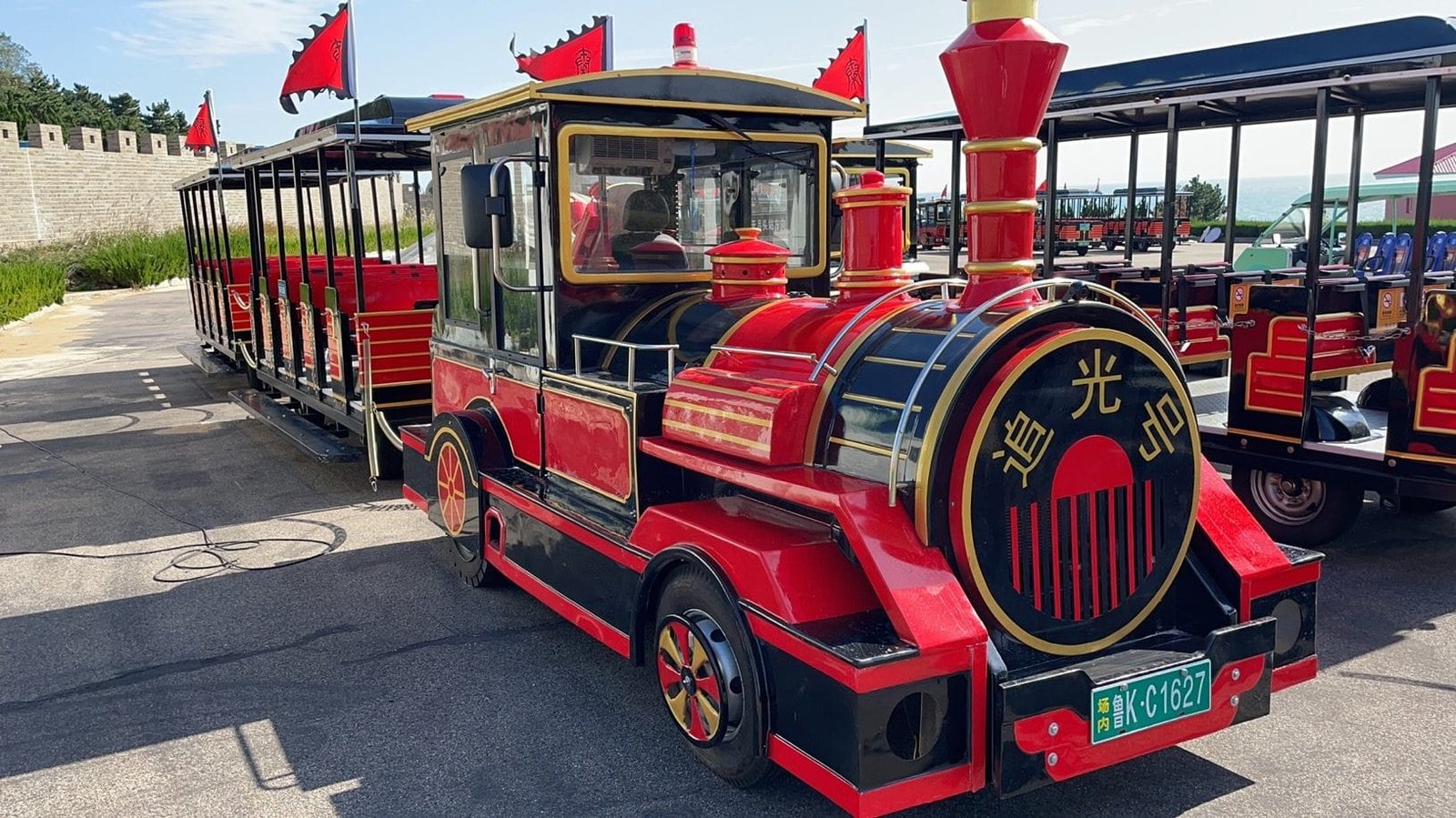
Sightseeing train models and prices, 16–72 seats
Two rides we deliberately left off the must-buy list: the giant pendulum and the Ferris wheel. Both are superb, but they are second-park purchases — you add them once the first seven are paying for themselves. See pendulum ride prices when you get there.
2026 Price Table: Footprint, Power and EXW Range
Everything below is EXW Kaifeng, converted from our September 2026 export price list and rounded. Sea freight, import duty and foundation works are extra — the budget section shows how much to add.
| Ride | Seats | Footprint | Power | EXW price* |
|---|---|---|---|---|
| Carousel | 16 | Ø6 m | 3 kW · 220/380 V | $6,500–9,500 |
| Carousel | 24 | Ø7.5 m | 2 × 3 kW · 380 V | $18,000–20,000 |
| Bumper car (2-seater) | 2 | per car | battery | $900–1,100 |
| Bumper car arena, turnkey | 12 | ~10 × 12 m | floor grid | $65,000–75,000 |
| Pirate ship, mini | 12 | 5 × 7 m | 3.5 kW | $4,500–7,500 |
| Pirate ship, FRP | 24 | 14 × 10 m | 15 kW VFD | $23,000–32,000 |
| Flying chair | 16 | Ø8 m | 4 kW | $13,500–17,000 |
| Flying chair | 24 | 15 m | 11 kW | $17,000–21,000 |
| Tagada | 12 | 4 × 5 m | 10 kW | ≈$10,500 |
| Tagada | 24 | 10 × 12 m | 11.5 kW | $16,000–17,600 |
| Tagada | 32 | 12 × 14 m | 27.5 kW | ≈$18,300 |
| Self-control plane | 16 | Ø8 m | 6 kW | $9,600–12,800 |
| Sightseeing train | 13–24 | route | lead-acid | $9,000–18,000 |
| Sightseeing train | 27 | route | lithium | $28,000–48,000 |
*Source: JHRides factory export price list, September 2026. Final price depends on theme paint, LED package, seat finish, voltage and the spare-parts kit.
What moves a ride’s price
- Seat count and steel weight. Going from a 16-seat to a 24-seat carousel roughly doubles the price; the same scaling applies to every ride on the list.
- Drive and power. Lithium instead of lead-acid adds $8,000–20,000 on a train; a hydraulic system adds cost up front and removes a whole class of maintenance.
- Theming and lighting. Custom FRP theme shells and a full LED package are quoted on top of the base price — usually 5–15%.
- Trailer-mounted versus fixed. A trailer version adds cost but removes foundations; the folding tagada and the trailer pirate ship exist for exactly this reason.
- Container count. The single biggest hidden line in a first budget — see the year-one breakdown below.
Budget Packages: What $40k, $150k and $300k Actually Buy
Before you decide how to start an amusement park business, decide which of these three shapes matches your money. All three assume the land is yours or leased — the packages cover equipment, freight, installation and the first spare-parts kit.
Mobile operator / mall plaza / scenic-spot corner
- 16-seat carousel — $6,500–9,500
- Self-control plane, 16 seats — $9,600–12,800
- Tagada 3–4 m — $10,500–12,000
- Mini pendulum, 6 seats — $8,500–10,500
- Freight, 2 × 20ft — $5,000–9,000
- Spares and install — $3,000–5,000
Municipal park / zoo / resort / city fairground
- 24-seat carousel — $18,000–20,000
- Bumper car arena, 12 cars — $65,000–75,000
- 24-seat pirate ship — $23,000–32,000
- 24-seat flying chair — $17,000–21,000
- Tagada 6 m — ≈$18,300
- Freight, 2–3 × 40ft — $10,000–16,000
- Civil works and spares — $15,000–25,000
Everything above, plus the rides people travel for
- Full mid-size package
- 27-seat lithium sightseeing train — $28,000–48,000
- 12-seat pendulum — $19,000–27,000
- Second kids’ cluster and theme package
- Site works and first-season working capital
Not sure whether a train belongs in your first order? Read the trackless vs track train comparison — the answer depends almost entirely on your surface, not on price.
How to Estimate Your Payback (With the Math Shown)
A worked example, with the assumptions visible. A 24-seat carousel lands at about $25,000 (EXW $20,000 + $3,000 freight share + $2,000 install). At $2 a ticket, 200 rides a day and a 70% margin — one operator, 3 kW, low maintenance — that is $280 a day, or roughly 4 months to pay for itself. The same math on a 12-car bumper arena ($80,000 landed, $3 tickets, 130 riders a day, 55% margin because of staffing and bumper wear) gives $215 a day, or 12–15 months.
| Ride | Riders/day* | Typical ticket | Simple payback |
|---|---|---|---|
| Carousel, 24-seat | 150–300 | $2 | 4–8 months |
| Bumper cars, 12-car arena | 80–160 | $3 | 10–18 months |
| Pirate ship, 24-seat | 80–150 | $3 | 4–7 months |
| Flying chair, 24-seat | 80–150 | $2.5 | 5–9 months |
| Tagada, 5–6 m | 120–250 | $2 | 4–8 months |
| Self-control plane | 100–200 | $2 | 5–9 months |
| Sightseeing train, 27-seat | 100–200 | $2.5 | 5–10 months |
*Riders per day in a mid-size park with roughly 300 daily visitors and per-ride ticketing. If you sell a wristband (one price, unlimited rides), divide the revenue across your rides instead of crediting each one separately.
Now the honest part. We build the rides; we do not control your traffic. Those payback figures assume the site already has visitors — the formula cannot fix a bad location. It also cannot fix the four things that most often kill a first-year park:
- Seasonality. A park that only trades six months a year doubles the calendar payback. Buy rides that work in cool weather — the train and the covered rides hold up better than water-adjacent attractions.
- Capacity you cannot fill. A 36-seat ride running at 40 riders a day earns less per dollar than a 16-seat running full. Match seats to your crowd, not to your ambition.
- Cheap rides that break. Downtime in peak season costs more than the discount. Ask what the spare-parts kit covers before you compare two quotes on price alone.
- No re-ride anchor. A park where nobody rides anything twice needs new visitors for every dollar. Bumper cars and the carousel are the re-ride engines.
Where the Money Actually Goes in Year One
The ride price is about 80% of a first-year budget. Here is the rest, using the $150k mid-size package as the example.
| Item | Typical range | Notes |
|---|---|---|
| Rides, EXW | $130,000–160,000 | The five-ride package above |
| Sea freight | $10,000–16,000 | 2–3 × 40ft; a real CIF invoice for a pirate ship shipment shows how this lines up |
| Import duty and clearance | 0–15% of CIF | Depends on country and HS code — check before ordering |
| Site works: pads, fence, power | $15,000–30,000 | Locally sourced; foundation drawings ship with the ride |
| Spare parts for 2 years | $4,000–8,000 | Order with the ride — sea freight is far cheaper than air freight in year two |
| Installation and commissioning | $3,000–6,000 | Remote video guidance included; engineer-on-site on request |
| Working capital | $10,000–20,000 | The first slow season — the line most first-time buyers skip |
Shipping documents are their own project. Our guide to importing a sightseeing train lists every document a real shipment needed, from the PI to the customs pack.
Five Checks Before You Pay a Deposit
- Match the ride to your crowd, not the catalogue A $20,000 ride in the wrong location earns less than an $8,000 one in the right one. Write down your visitor profile first — ages, group size, ticket budget — then choose rides.
- Confirm what EXW includes Structure, restraints, control cabinet and standard LED lighting should be in. Theme paint, fence and foundation works are normally separate. Get the list in the PI, not in a chat message.
- Price the freight before the deposit Ask for the container plan inside the quotation. Freight can add 10–20% to the equipment total, and the number of containers depends on how the ride packs — not on its footprint.
- Order the spare-parts kit with the ride Restraint springs, sensors and control relays are the parts you will need in year two. Priced into the same PI, they travel by sea; ordered later, they travel by air.
- Get the delivery date and commissioning support in writing Standard production runs 30–45 days. Peak season, October to December, is busier — lock the date and the video-guidance commitment into the contract.
Buyer FAQ
How much money do I need to start an amusement park business?
A starter cluster of three to four rides costs $40,000–60,000 EXW. Add 20–30% for freight, duty, site works and the first slow season, and you have a realistic launch budget of roughly $55,000–80,000. A mid-size park with five major rides lands at $130,000–200,000 in equipment alone.
Which ride earns the most?
In the parks we supply, the carousel and the bumper car arena are the two most consistent earners, and in zoos and scenic areas the train usually leads. But “most” depends on your traffic: a full 16-seat ride beats an empty 36-seat one every time.
Can I start with trailer-mounted rides?
Yes. Trailer carousel, trailer pirate ship, folding tagada and the folding bumper car arena all let you test a site before pouring concrete. Expect to pay somewhat more than the fixed version and to save it all back on foundations.
Should I buy second-hand rides to save money?
For anything safety-critical — restraints, drive systems, control cabinets — we recommend new. The saving usually disappears with the first season of downtime, and you inherit someone else’s maintenance history with no support.
What certificates do I need?
CE is the norm for Europe and ISO 9001 for the factory; many countries accept a test report plus a complete invoice pack. Tell us your destination country when you ask for the quote and we will confirm what that market requires.
How long from deposit to opening day?
30–45 days production, 25–40 days shipping depending on the route, and 5–10 days assembly with video guidance. Plan on about three months from deposit to first ticket.
Get the 2026 Price List and a Budget for Your Site
If you are planning to start an amusement park business, send us your site size, city and budget. We will reply with the ride mix that fits — a formal PI, a container plan and a freight estimate, usually within one working day.